Economy

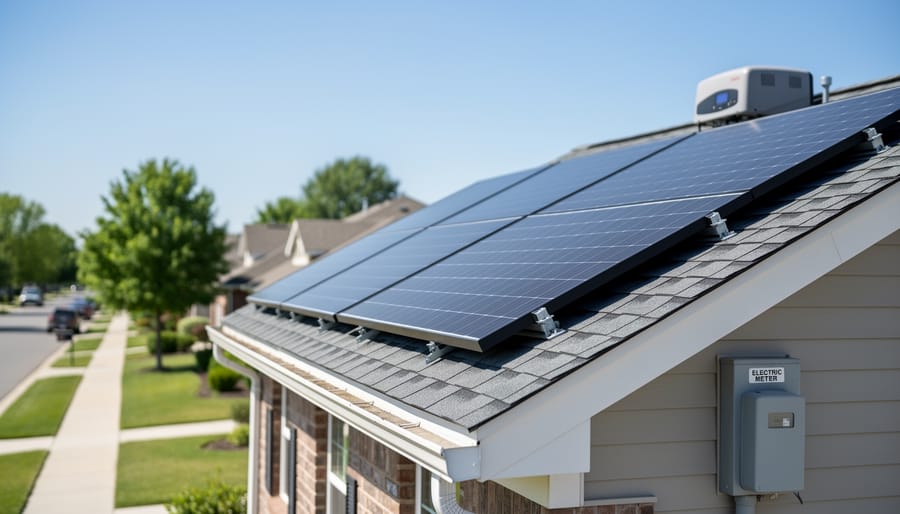
Close view of a suburban house roof with installed solar panels in sunny daylight, suggesting residential solar power in 2026.

A residential solar power system in 2026 costs an average of $31,135 for a typical 12 kW installation, or about $2.60 per watt before incentives. That figure drops to around $21,800 after applying the federal solar tax credit, making clean energy far more accessible than many homeowners expect.
The total price depends primarily on three factors: system size (measured in kilowatts), equipment quality, and installation complexity. A smaller 6 kW system suitable for modest energy needs runs closer to $15,600, while larger 15 kW systems designed for high-consumption households or those looking to eliminate grid dependence entirely can exceed $39,000. Panel brand, inverter type, battery storage inclusion, and roof characteristics all shift …

Read More

The post-COVID-19 era has left small businesses penniless, some closed, and some retrenched employees. The local economy has been massively displaced, and the pandemic has created unemployment to a great extent. Luckily for some who have lost their jobs have ventured into small scale business.
It takes the entire community to help regain the local business momentum. Economic and social growth come hand in hand; thus, promoting the local economy is not the sole responsibility of the government, but most importantly, it takes the help of ordinary citizens. Here are some examples of what we can do to achieve a sustainable local economy:

Rather than shop from malls, buy small scale stores.
Support individual businesses by buying from them. These can be any homemade products.
Start urban gardening to …

Read More

The ideal economic principle is to patronize your own product. The rise of the global economy has opened the floodgates of trade and industry in the global market. Although it brought many good things in terms of quality, price, and competition, it also became a ‘David versus Goliath’ arena.
In this post-pandemic period where many local businesses have closed, and unemployment has risen, relocalization can be an appropriate solution to rebuild our society. Relocalization is a “strategy to build a society based on the local production of food, energy and goods, and the local development of currency, governance, and culture” (source: postcarbon.org).
This is one mighty way to develop a resilient society during this post-pandemic period. Resilience in a societal context means (source:postcarbon.org). …

Read More

The COVID-19 has created more than enough problems from a global perspective. People look up to their leaders and anticipate the next move, the next solution, or the next program to alleviate various problems created by the COVID-19 pandemic. However, successful solutions do not only come from the greatest power, this time, but our next-door neighbors have also risen to face this global crisis with ingenuity, creativity, and sustainability despite limited resources.
For instance, the desert crop farming in Mexico where Zuni people create “waffle gardens” to store water and the Subak rice terraces in Bali. One of the best examples of local initiatives comes from a ‘less developed’ nation in Latin America, specifically from Uruguay. Despite lesser wealth, they make do of what resources they have.

Read More