
Sustainable policies are the concrete laws, regulations, and programs that embed environmental protection, social equity, and economic resilience into how communities and governments operate. These aren’t abstract ideals or distant goals. They’re actionable frameworks that anyone can help shape and implement, from advocating for renewable energy mandates in your city council to establishing community composting programs or protecting local green spaces through zoning reforms.
The power of sustainable policies lies in their ability to turn values into systems. When a municipality adopts a bike-lane expansion plan, requires new buildings to meet energy efficiency standards, or creates incentives for local food production, it’s building infrastructure that makes sustainable choices easier for everyone. You don’t have to rely on individual willpower when the policy itself creates the pathway.
What makes 2026 a particularly important moment for sustainable policy work is the growing recognition that local action drives real change. Communities across the country have proven that you don’t need to wait for federal initiatives to transform how your neighborhood manages resources, builds resilience, or addresses climate challenges. From participatory budgeting processes that give residents direct say in spending priorities to community solar programs that democratize clean energy access, the tools are available and the models exist.
This guide will walk you through what sustainable policies actually encompass, who has standing to participate in creating them, the concrete steps for bringing policy proposals forward in your community, your rights and responsibilities throughout the process, and where to find support when you need it. Whether you’re curious about how these policies function or ready to champion one in your town, you’ll find the practical roadmap here to move from interest to impact.
What Sustainable Policies Are
The Three Pillars of Sustainable Policy
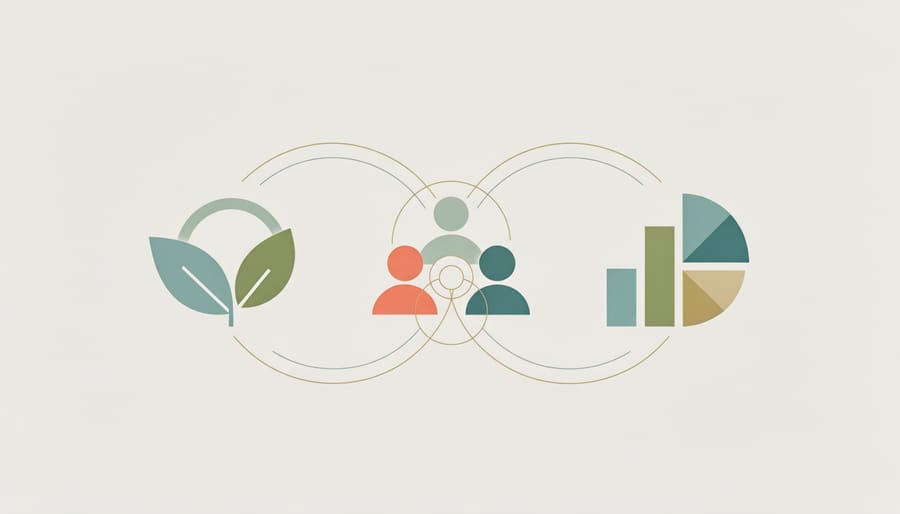
Sustainable policies rest on the three pillars of sustainability: environmental stewardship, social equity, and economic viability. These aren’t separate goals that compete for attention. They work together, each one supporting and strengthening the others.
Environmental stewardship means protecting the natural systems your community depends on. This includes clean air and water, healthy soil, biodiversity, and climate stability. When a town invests in renewable energy or protects local wetlands, it’s preserving resources that everyone needs to thrive.
Social equity ensures that everyone in the community benefits from and participates in sustainable development. It means fair access to resources, meaningful involvement in decisions, and policies that don’t burden vulnerable populations. A transit system that connects low-income neighborhoods to jobs demonstrates social equity in action.
Economic viability keeps communities financially healthy while they pursue environmental and social goals. Sustainable policies create jobs, reduce long-term costs, and build resilient local economies. When a city retrofits buildings for energy efficiency, it cuts utility bills, employs local contractors, and reduces carbon emissions simultaneously.
These pillars interconnect in practice. A community solar project (environmental) that prioritizes access for renters and lower-income households (social) while creating local jobs and lowering energy costs (economic) exemplifies how all three work together. Weak performance in one pillar eventually undermines the others, which is why truly sustainable policies address all three from the start.
Levels of Policy Implementation
Sustainable policies function across four interconnected scales, each with distinct characteristics and opportunities for community influence.
Community level represents the most direct sphere of action. Here, residents shape policies through neighborhood associations, community gardens, local food co-ops, and grassroots initiatives. These policies often emerge organically from community needs, a shared composting program, a neighborhood renewable energy project, or a community-supported agriculture network. Communities control implementation directly and see results quickly.
Municipal level encompasses city or town government. Policies at this scale include zoning regulations that prioritize mixed-use development, municipal composting programs, green building codes, and local renewable energy targets. Citizens influence these through city council meetings, ballot initiatives, and planning commission participation. Municipal policies carry legal weight while remaining responsive to local voices.
Regional level involves counties or multi-city collaborations. These policies address challenges that cross municipal boundaries: watershed protection, regional transit systems, or coordinated recycling infrastructure. Community members participate through regional planning boards and inter-municipal coalitions, though influence becomes more indirect.
National level sets broad frameworks and standards, carbon emission targets, environmental regulations, renewable energy incentives. While communities have less direct control, they shape national policy through collective advocacy, pilot programs that demonstrate scalability, and pressure on federal representatives.
Most communities find their greatest impact at local and municipal scales, where participation translates directly into policy outcomes and implementation happens within visible timeframes.
Who Can Advocate for and Benefit from Sustainable Policies

The short answer: nearly everyone in a community can advocate for sustainable policies, though the specific pathways differ by role.
Individual residents hold more power than they might realize. If you pay taxes, rent property, or simply live within a jurisdiction, you have standing to participate. You can sign petitions, attend public hearings, submit written comments during review periods, and vote on ballot measures. Homeowners often have additional channels through property owner associations. Renters can advocate through tenant unions or direct testimony at council meetings. Students and young people bring crucial voices to climate and equity discussions, even if they can’t vote yet.
Community groups amplify individual voices. Neighborhood associations, environmental coalitions, faith communities, and civic organizations can formally propose policy changes, organize public campaigns, and negotiate directly with officials. These groups often carry more weight in official processes because they represent collective interests and can demonstrate broad community support. A coalition of residents carries different influence than a lone advocate.
Local businesses play a dual role. They’re both stakeholders affected by new policies and potential champions who can model sustainable practices. Business improvement districts, chambers of commerce, and individual entrepreneurs can testify about economic impacts, propose business-friendly implementation approaches, and sometimes fund pilot programs. Their participation signals that sustainability and economic vitality can coexist.
Municipal officials and staff translate community input into actionable policy. Elected council members, planning commissioners, and sustainability coordinators work within formal government structures. They draft ordinances, allocate budgets, and shepherd proposals through approval processes. Residents can influence these officials through voting, direct advocacy, and appointment to advisory committees.
| Stakeholder Type | Primary Roles | Available Pathways |
|---|---|---|
| Individual Residents | Voters, commenters, petition signers | Public hearings, written comments, ballot measures, council testimony |
| Community Groups | Coalition builders, formal proposers | Organized campaigns, direct negotiation, policy drafting, public mobilization |
| Local Businesses | Economic stakeholders, pilot implementers | Chamber testimony, business district proposals, voluntary adoption programs |
| Municipal Officials | Policy drafters, budget allocators | Ordinance creation, commission appointments, formal votes, implementation oversight |
| Advocacy Organizations | Technical experts, campaign organizers | Research provision, coalition support, lobbying, public education campaigns |
Advocacy organizations bring specialized expertise. Regional environmental groups, policy institutes, and national networks like the Sierra Club or ICLEI provide research, template policies, and campaign support. They help communities avoid reinventing solutions and connect local efforts to broader movements.
The pathways overlap and reinforce each other. A successful policy push typically involves individuals testifying, community groups organizing, businesses offering practical input, and officials crafting workable language. You don’t need permission to start advocating, just clarity about which pathway fits your role and resources.
How Communities Adopt Sustainable Policies: The Process

Building Your Community Coalition
Start by mapping your community’s existing networks. Look beyond the usual suspects: invite parents from school groups, members of faith communities, small business owners, gardeners from community plots, and younger residents who’ll inherit the policies you create. A coalition that mirrors your community’s actual diversity brings credibility and catches blind spots early.
Form a core working group of five to eight committed individuals who can meet regularly. This team will coordinate outreach, draft proposals, and keep momentum going between larger coalition meetings. Choose people with complementary skills, someone who understands local government processes, a good communicator, a detail-oriented organizer, and residents with deep community roots who know how to reach people others might miss.
Schedule coalition meetings at times and places that work for people with jobs, caregiving responsibilities, and varied schedules. Rotate meeting locations between different neighborhoods. Provide childcare if possible. Share materials in languages your community speaks, and use plain language that doesn’t require a policy degree to understand.
Ground your coalition’s work in concrete community needs. If you’re proposing solar installations, start with an energy assessment of public buildings to show real costs and savings. When people see how policies address problems they actually face, high energy bills, flooding from poor stormwater management, lack of local jobs, they engage more readily than with abstract environmental arguments.
Create clear roles so everyone can contribute according to their capacity. Some people will attend every meeting; others will show up for key public hearings or spread the word through their networks. Both matter equally.
Navigating the Approval Process
The formal approval process for sustainable policies follows a predictable sequence that empowers communities to participate effectively. Once your coalition submits a proposal to your local council or board, the governing body typically schedules it for initial review at a public meeting. At this stage, officials evaluate whether the proposal aligns with existing regulations and warrants further consideration.
If your proposal advances, the government schedules local government public hearings where community members can formally submit comments, voice concerns, and offer support. These sessions follow specific notice requirements, giving residents weeks to prepare testimony. You’ll find the hearing date, location, and submission guidelines posted on your municipality’s website and in local newspapers.
During the hearing itself, speakers usually get two to five minutes to present their views. Bring written copies of your comments to distribute, keep your points focused on policy impacts rather than personal opinions, and cite specific evidence whenever possible. Council members may ask clarifying questions but won’t debate your testimony directly.
After public input closes, the governing body deliberates in subsequent meetings before taking a formal vote. Some policies require multiple readings or special majority thresholds. If approved, the policy moves to implementation. If rejected or tabled, you’ll receive feedback explaining the decision and can refine your approach for resubmission.
From Adoption to Action
Once your community’s sustainable policy passes, the real work begins. Most successful communities establish an implementation committee within 30 days of approval. This committee typically includes council representatives, community volunteers, and relevant department heads who translate policy language into concrete actions.
Budget allocation happens next. Your local government will designate funds for initial programs, whether that’s installing bike lanes, launching composting education, or hiring a sustainability coordinator. Implementation timelines usually span 6-18 months for initial phases.
Community monitoring keeps policies accountable. Volunteers often track progress using simple metrics: trees planted, energy usage reduced, jobs created. Quarterly public check-ins let residents see results and voice concerns.
Successful policies evolve. Communities routinely adjust targets, expand programs that work, and scale back those that don’t. This adaptive approach, not rigid adherence to the original plan, typically determines long-term success.
Community Rights and Responsibilities Under Sustainable Policies
When communities adopt sustainable policies, they acquire both meaningful rights and real responsibilities that shape how these policies work in practice. Understanding both sides helps communities prepare for successful implementation and avoid common pitfalls.
Communities gain concrete benefits when sustainable policies take effect. You have the right to a cleaner, healthier environment as air quality standards improve, water resources receive protection, and green spaces expand. Economic opportunities flow from sustainable development, including jobs in renewable energy, retrofitting programs, and local food systems. Democratic participation becomes more robust because sustainable policy frameworks typically include ongoing public input mechanisms, transparency requirements, and community oversight roles. Communities also gain access to technical support, grant funding, and regional networks that share knowledge and resources.
These rights come with corresponding responsibilities:
- Compliance with new regulations, from waste sorting requirements to building standards
- Active participation in monitoring and feedback processes to help policies adapt and improve
- Resource contribution through taxes, fees, volunteer time, or in-kind support
- Ongoing education about policy goals, methods, and how individual actions connect to community outcomes
- Good-faith engagement with neighbors who may disagree about specific policy approaches
Responsibilities also include realistic budget planning both at the household and municipal level, to fund infrastructure changes or program operations. Communities must maintain involvement beyond the initial adoption phase, showing up for implementation committees, reporting problems, and celebrating successes.
The balance works when communities approach sustainable policies as an ongoing relationship rather than a one-time decision. Your rights strengthen as you fulfill responsibilities, and vice versa. Communities that remain engaged, adapt to challenges, and hold themselves and officials accountable see the greatest long-term benefits. Those that expect policies to work without community participation often find that enforcement weakens, funding dries up, or political will evaporates. Sustainable policies require sustained community partnership to deliver their full promise.
Success Stories: Communities Leading the Way
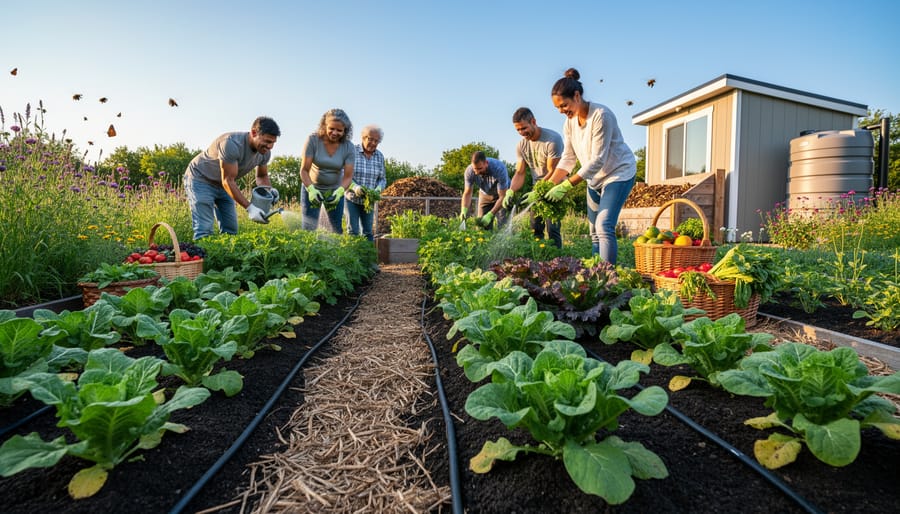
Communities across the globe prove that sustainable policies deliver real, measurable benefits regardless of location or population size. These stories demonstrate the power of local action and collective commitment.
Burlington, Vermont became the first U.S. city to run on 100% renewable energy in 2014, a goal achieved through sustained policy work beginning in the early 2000s. The city council faced initial skepticism about costs but built public support through transparent community meetings and incremental targets. By investing in hydroelectric, wind, and biomass sources, Burlington not only met its goal but stabilized energy costs for residents. The city now serves as a technical advisor to other municipalities pursuing similar transitions.
In rural Colombia, the municipality of San Gil transformed waste management through a comprehensive composting and recycling policy adopted in 2018. Community leaders organized neighborhood workshops to teach sorting techniques and built trust by starting with a pilot program in willing neighborhoods before expanding citywide. They overcame space constraints by partnering with local farms to accept organic waste for composting. Within three years, San Gil diverted 62% of household waste from landfills and created 15 green jobs managing the program.
Totnes, Englandpopulation 8,500, pioneered local food policies through its Transition Town initiative. The community coalition drafted policies supporting community gardens, farm-to-school programs, and local procurement rules for municipal facilities. Initial resistance from established food suppliers eased when local businesses saw increased foot traffic and reduced transportation costs. The policy framework, adopted in phases from 2009 to 2015, increased local food consumption by 40% while strengthening food security and resilience and savings for residents.
Kigali, Rwanda demonstrates that sustainable policies work in rapidly developing cities. The capital banned plastic bags in 2008 and followed with comprehensive waste sorting policies in 2019. Government officials partnered with community associations in each neighborhood to train residents and enforce compliance through positive incentives rather than punitive fines. The city now boasts one of Africa’s cleanest urban environments, with tourism revenue increasing alongside environmental gains.
These communities started with different resources and faced unique obstacles, yet each succeeded by building coalitions, communicating transparently, and adapting policies to local context.
Where to Get Help and Resources
No community needs to navigate sustainable policy adoption alone. A robust network of organizations, tools, and fellow advocates stands ready to help at every stage of your journey.
Technical Assistance and Policy Development
The American Planning Association offers free policy templates and technical guides specifically designed for communities starting sustainability initiatives. Their resources cover everything from drafting ordinances to conducting community assessments. The International City/County Management Association provides similar support with a focus on implementation strategies that work within existing municipal structures.
For communities exploring renewable energy policies, the Department of Energy’s Technical Assistance Program connects local governments with experts who can assess solar panel needs evaluate grid capacity, and design incentive programs. These consultations are free and tailored to your community’s specific context.
Funding and Financial Resources
Grants don’t have to be complicated. The Environmental Protection Agency’s Environmental Justice Grants support communities developing policies that address both sustainability and equity, with awards ranging from small seed grants to six-figure implementation funding. Many states run parallel programs with simpler applications and faster turnaround times.
The National League of Cities maintains an updated database of federal, state, and private funding sources for sustainable community projects. Their staff can also connect you with communities that have successfully secured similar funding, making the process less intimidating.
Legal and Regulatory Guidance
Local Government Environmental Assistance Network provides free legal resources and templates for drafting enforceable sustainability ordinances. They can also connect you with pro bono attorneys who specialize in environmental and land use law.
Educational Networks and Peer Support
Sometimes the most valuable resource is another community that’s been through it. The Transition Network connects over 1,200 communities worldwide working on sustainability transitions. Their online forums, regional meetups, and knowledge library offer real-world wisdom you won’t find in official handbooks.
The National Association of Community Development Extension Professionals links communities with university researchers and extension agents who provide free technical assistance, data analysis, and training.
Most resources listed here are free or low-cost, recognizing that sustainable change shouldn’t require big budgets. Start with one or two connections that match your most pressing need, and build your support network from there.
How to Apply or Complete the Process
Starting a sustainable policy initiative in your community doesn’t require navigating complex bureaucratic systems. Most communities begin informally, identifying a specific sustainability goal before moving toward official channels.
First, document your community’s current situation. Gather baseline data on the issue you’re addressing, whether that’s energy use, waste reduction, or local food systems. If you’re pursuing renewable energy policies, research practical information like solar system cost or off grid solar options to understand what you’re proposing.
Next, draft a clear policy proposal. Keep it simple: state the problem, your proposed solution, expected benefits, and implementation timeline. Share this draft with your coalition for feedback before approaching local government.
Contact your municipal clerk or city manager to learn your community’s specific process. Some towns require petitions with resident signatures, while others accept proposals directly from community groups or council members.
Attend a public meeting to present your proposal during the comment period. Follow up in writing, and stay engaged through subsequent meetings as officials discuss and refine the policy. Persistence matters more than perfection in this phase.
Common Questions About Sustainable Policies
How much does it cost to implement sustainable policies?
Costs vary widely based on policy scope, but many sustainable policies actually reduce expenses over time through energy savings, waste reduction, and improved efficiency. Start with low-cost policies like improved recycling programs or community gardens, then build toward larger infrastructure investments as you demonstrate success and secure funding.
What if we face political opposition?
Opposition is normal and often stems from concerns about costs or change rather than disagreement with sustainability itself. Focus on building broad coalitions, emphasizing economic benefits, and starting with pilot projects that demonstrate value without requiring major commitments.
How long does it take to see results?
Some benefits appear immediately (cleaner parks, reduced waste), while others take years to fully materialize (energy cost savings, ecosystem restoration). Set both short-term milestones and long-term goals so your community can celebrate progress along the way.
How do we measure whether our policies are working?
Track specific metrics tied to your policy goals: tons of waste diverted, kilowatt-hours saved, local jobs created, or air quality improvements. Regular community surveys can also capture less tangible benefits like increased civic engagement and quality of life.
Beyond these common concerns, communities often wonder whether they need expert help to get started. While technical assistance can be valuable, many communities begin successfully with committed volunteers who research best practices and learn as they go. You don’t need to have all the answers before taking your first steps.
Another frequent question involves what happens if leadership changes. Strong sustainable policies include built-in accountability mechanisms and broad community ownership that transcends individual elected officials. Document your processes, engage diverse stakeholders, and create institutional structures that outlast any single administration.
Communities also ask whether sustainable policies work in their specific context, whether that’s a small rural town, a suburban neighborhood, or an urban district. The answer is yes, but the policies will look different. Rural communities might focus on agricultural sustainability and land conservation, while urban areas might prioritize public transit and green building standards. The three-pillar framework adapts to any setting.
Adopting sustainable policies isn’t reserved for well-funded cities or politically progressive strongholds. Communities of every size, budget, and political makeup have found pathways to meaningful change by starting with what they have and building from there. You don’t need a perfect plan or unanimous agreement to begin. The most successful communities started with a single concerned resident, one passionate coalition meeting, or a modest pilot project that proved what was possible.
The broader vision of sustainable politics depends on thousands of these local efforts, each community learning, adapting, and sharing what works. When your town improves energy efficiency in public buildings, protects local water sources, or creates economic opportunities through green infrastructure, you contribute to a movement that’s reshaping how communities govern themselves. You’re proving that sustainability isn’t an abstract ideal but a practical framework for solving real problems.
Your community already possesses the essential ingredients: people who care, local knowledge that no outside expert can match, and the democratic tools to make change happen. The resources, templates, and networks outlined in this guide exist to support your vision, not dictate it. Start with the issue that matters most to your neighbors. Build your coalition one conversation at a time. Use the approval processes available to you, and learn as you go.
The path to local self-sufficiency begins with a single step your community takes together. What will yours be?