Month: May 2026

Close-up of a green seedling in rich soil with a rusty chain wrapped around its stem, lit by warm evening light, with a blurred background of garden beds and hints of artificial turf.

Stop. Before you consider Private Blog Networks (PBNs) like Hetneo for your sustainable living blog, understand this: they promise quick SEO gains but deliver long-term damage that directly contradicts everything your community stands for.
PBNs involve creating or purchasing networks of low-quality websites solely to manipulate search rankings through artificial backlinks. While marketers tout benefits like “instant authority” and “controlled anchor text,” these tactics violate Google’s guidelines and risk severe penalties including complete deindexing. More importantly, they’re fundamentally dishonest—the antithesis of the authentic, transparent values that define sustainable living.
Your blog exists to inspire genuine change through real …

Read More
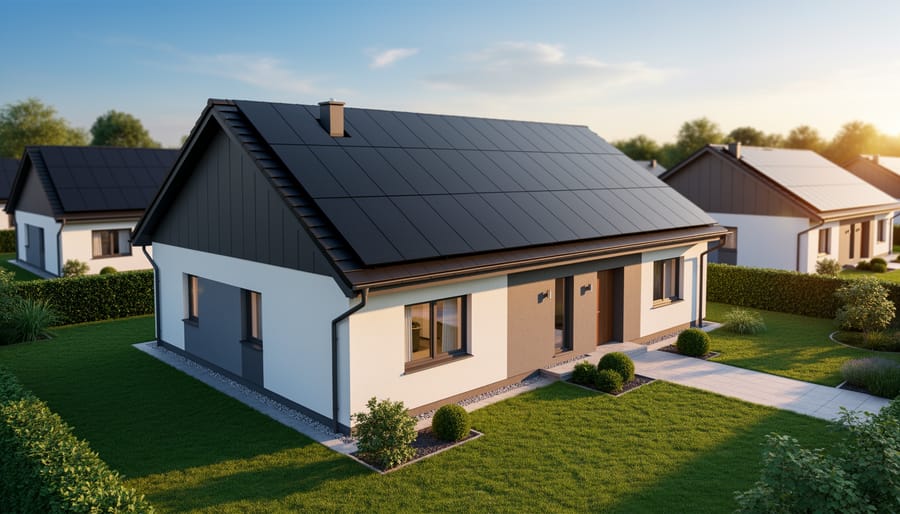
Elevated view of a modern house with a south-facing roof covered in dark monocrystalline solar panels, lit by golden-hour sunlight, with yard, neighboring rooftops, trees, and soft sky in the background.

Calculate your home’s monthly electricity consumption by reviewing your utility bills from the past year, then divide that number by 30 to get your daily kilowatt-hour usage. A typical American household uses 30 kilowatt-hours per day, requiring between 15 to 25 solar panels depending on panel wattage and your location’s sun exposure.
Multiply your daily energy needs by 0.25 to account for system inefficiencies, then divide by your area’s average peak sun hours. In sunny California, you might need fewer panels than in cloudier Seattle for the same energy production. Most residential systems range from 5 to 10 kilowatts, with each 400-watt panel producing roughly 1.5 kilowatt-hours daily in optimal conditions.
Consider your roof’s available space and orientation before finalizing system size. South-…

Read More