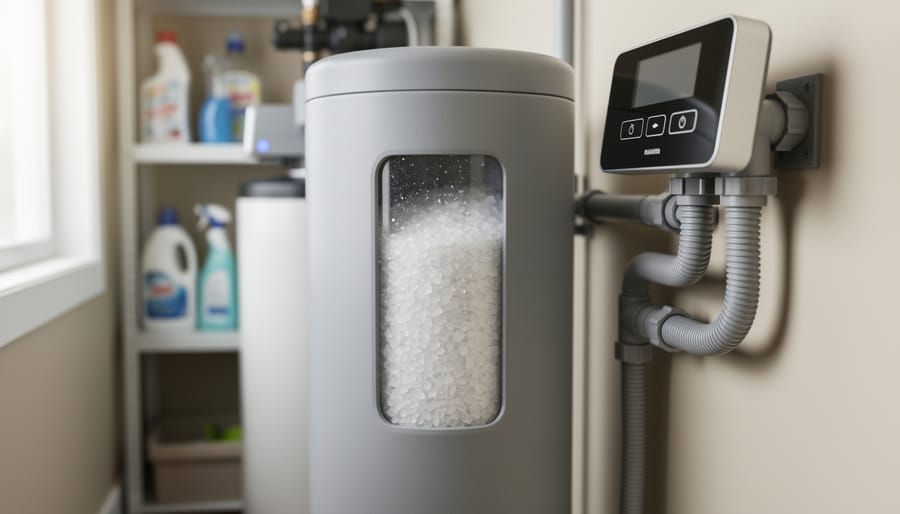
If you’ve noticed hard water stains on your dishes or your soap isn’t lathering, the most common culprit is depleted salt in your brine tank. Check the salt level first. You should see salt at least a quarter-full in the tank, and it should feel loose, not clumped into a solid bridge. This simple check solves roughly 60% of water softener complaints.
Beyond salt issues, your system might be stuck in bypass mode, have a clogged resin bed, or face a malfunctioning control valve. Water softeners rely on a straightforward regeneration cycle, where salty brine rinses mineral buildup from resin beads that capture calcium and magnesium. When any part of this cycle breaks down, hard water slips through untreated.
Before you spend hundreds on a service call, most water softener problems respond to systematic DIY troubleshooting. This guide walks you through identifying your specific symptoms, understanding what’s actually broken, and fixing it yourself with basic tools you likely already own. You’ll learn to diagnose everything from complete system failure to partial softening, strange noises, and water quality issues.
Safety note: always unplug electric softeners before opening the control head. If you discover cracked tanks, severe leaking, or electrical problems beyond a simple reset, call a licensed plumber. Some repairs require specialized parts or void warranties when attempted at home.
We’ve organized this troubleshooting process to get you from problem to solution quickly, drawing on community-tested fixes that have helped thousands of households restore their water quality without professional help. You’re more capable than you think.
Quick Symptom Triage: Identifying Your Water Softener Problem
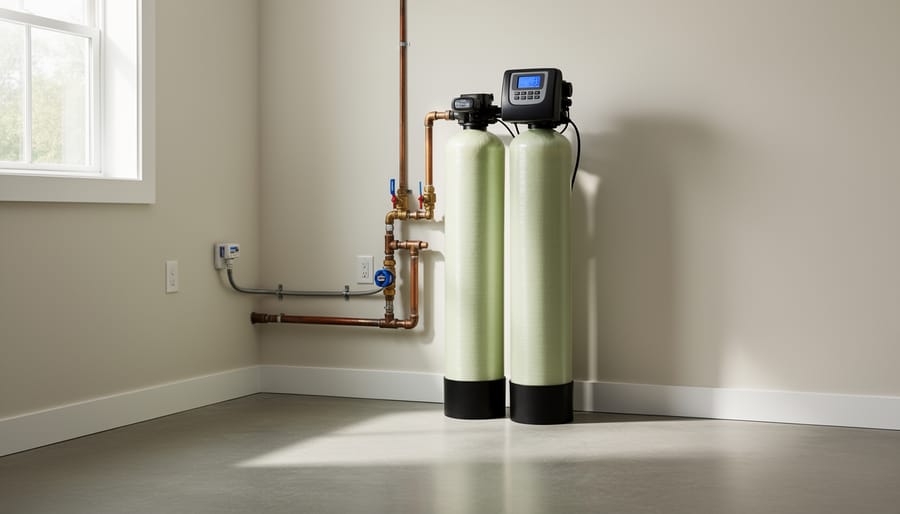
When your water softener isn’t working right, you’ll notice it fast. Soap stops lathering properly, dishes come out spotty, or your skin feels dry and itchy after showers. Before you start taking things apart or calling for help, spend five minutes identifying what’s actually wrong. Matching your symptoms to the right problem category saves hours of trial-and-error and prevents unnecessary repairs.
The most obvious sign is hard water returning to your taps. You’ll see white mineral deposits on faucets, soap scum building up in the shower, and your water-using appliances working less efficiently. If you’re experiencing this, your softener has stopped removing minerals, but the cause could range from an empty salt tank to a failed valve.
Check your brine tank next. A salt bridge looks normal from above but has a hollow space underneath where water should be dissolving salt. Tap the salt surface with a broom handle; if it feels solid several inches down but water sits beneath it, you’ve found the problem. Salt mushing creates the opposite issue: a thick sludge at the bottom that prevents proper brine formation.
Listen to your system during its regeneration cycle. A water softener that runs constantly wastes water and salt while failing to soften effectively. This usually points to a stuck valve or a failed timer. On the flip side, complete silence when regeneration should occur means the system isn’t cleaning itself at all.
| Symptom | What It Means | Urgency Level |
|---|---|---|
| Hard water signs return (spots, scale, poor lathering) | System not regenerating or salt supply issue | DIY fix |
| Salt bridge or mushing in tank | Salt not dissolving properly into brine | DIY fix |
| Low water pressure throughout house | Clogged resin bed or blocked valve | DIY fix, escalate if no improvement |
| System runs continuously or won’t start regeneration | Timer malfunction or stuck valve | DIY troubleshooting first |
| Resin beads in tap water | Damaged resin bed or failed screen | Professional assessment needed |
| Error codes or blinking lights | System detecting internal fault | Check manual first, then professional |
Water pressure drops affect the whole house when your softener is the culprit. Turn off the bypass valve to see if pressure returns; if it does, sediment or resin buildup is restricting flow through your softener.
Error codes vary by manufacturer, but any blinking light or digital display message deserves attention. Grab your owner’s manual or search the model number online. Some codes indicate simple fixes like unplugging and resetting, while others signal component failures that need replacement parts.
Understanding What Causes Water Softener Failures
Knowing why water softeners fail helps you fix problems faster and prevents repeat breakdowns. Most issues stem from a handful of predictable causes that anyone can learn to recognize with a bit of practice.
Salt-Related Problems
Salt bridges and salt mush rank among the most frequent culprits. A salt bridge forms when humidity creates a hard crust in your brine tank, leaving a hollow space underneath where water can’t dissolve salt properly. The result? Your system thinks it has salt but can’t create the brine solution needed for regeneration. Salt mush happens when salt dissolves improperly and forms a thick sludge at the tank’s bottom, blocking water flow and preventing normal operation.
Mechanical and Component Failures
Moving parts eventually wear out. The control valve that directs water flow through your system contains seals, pistons, and small motors that can stick, crack, or stop working after years of constant use. Timers sometimes fail to trigger regeneration cycles, leaving your resin bed exhausted and unable to soften water. The float mechanism in your brine tank might stick in the wrong position, causing overfilling or preventing proper brine draw.
- Salt Bridge
- A hardened crust that forms in the brine tank, creating a hollow gap between the salt and water below. This prevents proper brine formation.
- Resin Bed
- The layer of tiny plastic beads inside the softener tank that captures hard minerals from your water. These beads need regular regeneration to keep working.
- Brine Tank
- The separate tank where salt and water mix to create the cleaning solution that recharges the resin bed.
- Regeneration Cycle
- The scheduled cleaning process where saltwater flushes through the resin bed to remove captured minerals and restore softening capacity. Most systems regenerate every few days.
- Hardness Grains
- The measurement unit for mineral content in water, typically expressed as grains per gallon (GPG). One grain equals about 17 parts per million of calcium and magnesium.
Other Common Causes
Mineral buildup gradually clogs the resin bed, reducing its effectiveness even when the system regenerates properly. Iron and manganese are particularly problematic, coating resin beads with a film that blocks normal ion exchange. Incorrect settings, often left over from installation or changed accidentally, can set regeneration frequency too low or brine refill levels wrong. Power outages reset timers on some models, throwing off the entire regeneration schedule until you reprogram them. Finally, changes in your municipal water supply, increased hardness levels or added iron, can overwhelm a system that previously worked fine.
Understanding these root causes puts control back in your hands and your community’s, reducing dependence on expensive service calls for issues you can often fix yourself.
Step-by-Step Fixes for Common Water Softener Problems
Problem 1: Hard Water Symptoms Return
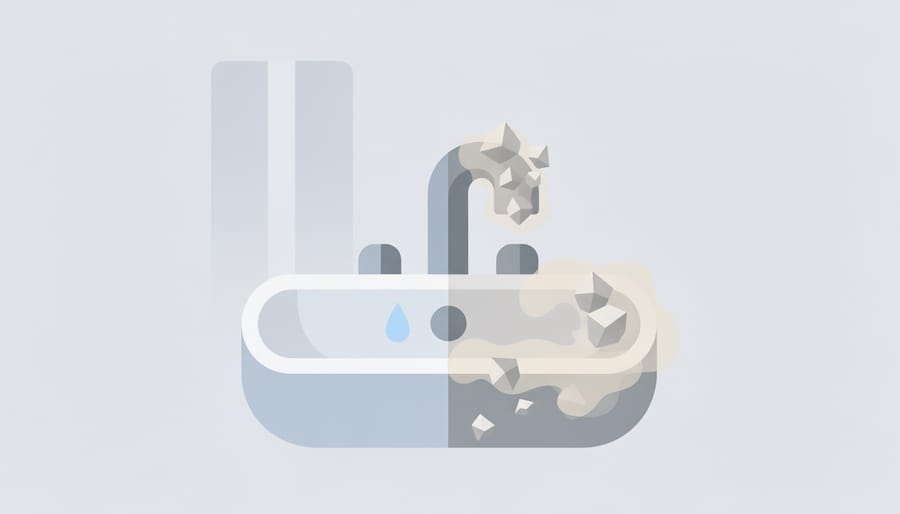
When hard water symptoms reappear, spots on dishes, soap scum in showers, stiff laundry, your water softener isn’t doing its job. This is the most common water softener complaint, and the good news is you can usually fix it yourself without specialized tools.
Start with a systematic check of your system, working from the simplest causes to more complex ones:
- Check the salt level in your brine tank. You need at least 3-4 inches of salt above the water line for proper regeneration. If it’s low, refill with high-quality salt and wait 24 hours for the system to regenerate.
- Look for a salt bridge by gently pushing a broom handle down into the salt. If it hits a hard crust with empty space below, you’ve found a salt bridge. Break it up by tapping firmly with the handle, then remove the broken chunks and add fresh salt.
- Inspect for salt mush at the tank bottom. If the water feels thick or sludgy when you dip a finger in, you have crystallized salt blocking the brine draw. Scoop out all salt, drain the tank completely, remove the sludge layer, rinse thoroughly, and refill with fresh salt.
- Test your water hardness with a home kit (available at hardware stores for under $15). If hardness exceeds 3 grains per gallon, your system needs adjustment.
- Increase regeneration frequency through your control panel. Most systems default to every three days, but harder water or increased household use may require every two days. Consult your manual for programming instructions.
- Check that the bypass valve is in the service position, not bypass. This simple oversight accounts for about 15% of “hard water is back” complaints.
After making adjustments, run a manual regeneration cycle and test your water again in 24 hours. If symptoms persist after these fixes, the resin bed may be exhausted or fouled with iron, requiring a professional resin cleaning or replacement.
Problem 2: System Won’t Regenerate or Runs Continuously
A water softener that refuses to regenerate leaves you with hard water, while one that regenerates constantly wastes salt and water. Both problems typically stem from timer failures, stuck valves, or incorrect programming.
Start by checking the power source. Confirm the outlet is functioning by plugging in another device, then inspect the transformer for visible damage. Many units have a small backup battery that maintains timer settings during brief outages; a dead battery can reset your system to factory defaults, stopping scheduled regeneration.
For systems that won’t regenerate, manually initiate a cycle by turning the dial or pressing the regenerate button (consult your manual for model-specific instructions). If this works, your timer mechanism likely needs replacement. If nothing happens, the problem lies deeper in the control valve. Listen for motor noise during manual regeneration. Silence indicates a failed motor or electrical connection; humming without water flow suggests a stuck valve piston.
Continuous regeneration often results from a faulty timer switch that never advances past the regeneration phase. Try unplugging the unit for 30 seconds to reset the electronics. If the problem persists, the control valve may have debris preventing proper sealing. Carefully remove the valve cover and rinse components with clean water, checking for cracked seals or worn O-rings.
Check your programming settings match your household’s actual water usage and hardness level. An incorrectly entered hardness number can trigger excessive or insufficient regeneration cycles. Most modern softeners display settings through button sequences detailed in the owner’s manual.
Problem 3: Low Water Pressure Throughout the House
When your water softener causes a noticeable drop in household water pressure, the culprit is usually a blockage somewhere in the system restricting flow. This problem often develops gradually as sediment accumulates or the resin bed becomes compacted.
Start by checking if the pressure drop affects only soft water outlets or the entire house. If it’s everywhere, your water softener’s bypass valve might be partially closed, open it completely. If pressure remains low, the resin bed likely needs attention.
To clean a clogged resin bed, first put your system in bypass mode to restore temporary water flow. Then initiate a manual regeneration cycle, which flushes the resin with brine and backwashes sediment out. If this doesn’t help, the resin bed may be compacted from iron buildup or age. Pour resin cleaner (available at hardware stores) into the brine tank and run another regeneration cycle following product instructions.
Check the venturi valve, a small component that creates suction during regeneration. Remove it according to your manual and clean any visible sediment with a toothpick and warm water. Even tiny blockages here dramatically reduce efficiency.
If pressure problems persist after these steps, sediment might be entering from your main water line. Consider installing a whole-house sediment filter before the softener to protect the system long-term.
Problem 4: Salt Mushing or Bridging in the Brine Tank
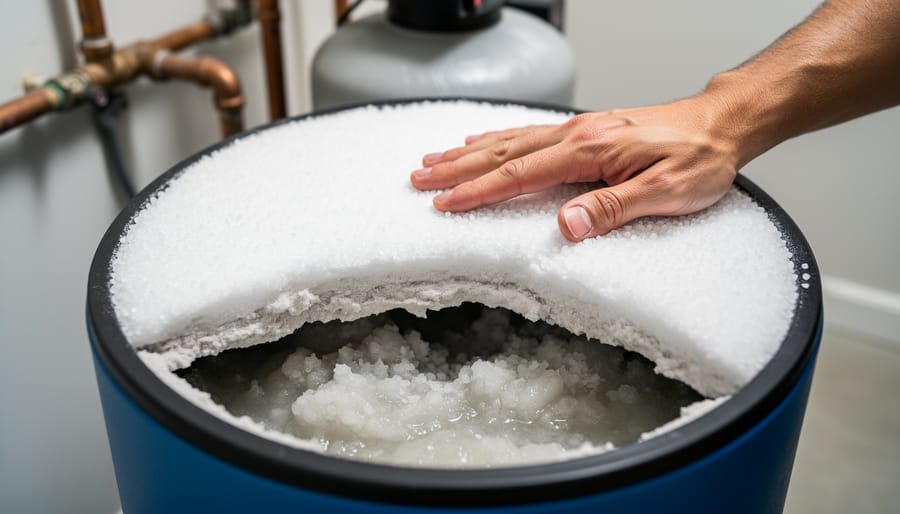
Salt mushing and bridging are two distinct problems that prevent proper regeneration. A salt bridge forms when a hard crust develops above the water level in your brine tank, creating a hollow cavity underneath. The salt appears full, but water can’t dissolve it. Tap the salt surface with a broom handle, if it sounds hollow or the crust breaks to reveal empty space below, you’ve found a bridge.
Salt mush occurs when dissolved salt recrystallizes at the bottom of the tank, forming a thick sludge that blocks water intake. You’ll notice your tank stays full of water that won’t drain.
To fix a salt bridge, carefully break up the crust using a broom handle, then scoop out chunks with a bucket. For salt mush, you’ll need to empty the tank completely. Disconnect power, scoop out remaining salt, then use a wet-dry vacuum to remove the sludge layer. Scrub the tank bottom with warm water before refilling.
Prevent recurrence by switching to high-purity pellet salt (avoid rock salt), keeping your tank only half-full to reduce pressure, and ensuring proper ventilation in humid basements. Check the tank monthly, especially during summer when humidity peaks.
Problem 5: Resin Beads in Household Water
Finding small, sand-like beads in your water is alarming but usually fixable. These resin beads escape when the internal screens or support bed components break down, typically after 10-15 years of use or following a significant pressure surge.
Immediate action: Stop using the softener immediately and switch to bypass mode to prevent beads from reaching faucets and appliances. Run cold water in sinks and tubs for several minutes to flush beads from your plumbing. Install mesh screens on faucet aerators temporarily to catch any remaining beads.
Check if the problem stops after bypassing. If you see just a few beads once, it might be a minor screen tear that settles. However, continuous bead release signals serious resin bed failure requiring professional replacement, the entire tank internals need changing, not a DIY fix.
Consider this an opportunity to upgrade to high-efficiency resin when replacing, which often lasts longer and uses less salt. Most systems need resin replacement eventually; catching it early prevents damage to fixtures downstream.
When to Call a Professional
While many water softener issues are DIY-friendly, some situations demand professional expertise. Call a technician if you encounter electrical component failures, major valve body cracks, or persistent resin contamination despite cleaning. Complex control board malfunctions and warranty-covered repairs also warrant professional service.
Before hiring, tap into community resources. Ask neighbors for trusted local technician recommendations, or check if your community has a tool-lending library with water testing equipment. Some areas even have skilled retirees who offer affordable repair help through community centers. Sharing repair contacts and experiences with neighbors builds local resilience while keeping costs down for everyone.
Prevention: Maintaining Your Water Softener for Long-Term Reliability
The best way to avoid water softener problems is to catch them before they start. Regular maintenance takes less time than troubleshooting failures and extends your system’s lifespan by years, which means fewer replacement parts, less waste, and lower long-term costs for your household.
Establish a Consistent Cleaning Schedule
Your water softener needs attention at predictable intervals. Check the brine tank monthly for salt bridges or mush by gently probing the salt surface with a broom handle. Every three months, inspect the resin tank for sediment buildup and flush it if you notice reduced water flow. Once a year, run a resin cleaner through the system to remove iron deposits and restore efficiency. Mark these tasks on your calendar or set phone reminders so they become routine rather than forgotten until something breaks.
A simple maintenance rhythm keeps your softener running reliably:
- Monthly: Check salt levels and probe for bridges or mush in the brine tank
- Monthly: Verify the system is regenerating on schedule by listening for the cycle
- Quarterly: Clean the brine tank interior and remove any sediment at the bottom
- Quarterly: Test your water hardness with an inexpensive test strip to confirm effectiveness
- Annually: Run resin cleaner through the system to remove iron and mineral buildup
- Annually: Inspect all hoses, fittings, and valves for leaks or wear
Choose the Right Salt and Store It Properly
Not all water softener salt performs equally. Evaporated salt pellets dissolve cleanly and leave less residue than rock salt, reducing the risk of bridging and extending time between deep cleanings. Solar salt falls somewhere in between. Buy what works for your climate and humidity level, then store bags on pallets or shelves rather than directly on damp basement floors.
Some neighborhoods organize bulk salt purchases to get better prices and reduce packaging waste. One person volunteers to coordinate the order, everyone contributes their share, and you split the delivery. It cuts costs while building relationships with neighbors who can swap maintenance tips or lend tools when needed.
Monitor Water Hardness Regularly
Test your water every few months with strips from the hardware store. If hardness levels creep up despite a full salt tank, your system may need adjustment or cleaning rather than waiting until scale reappears on your fixtures. Catching gradual efficiency loss early prevents the frustration of sudden hard water problems.
Success Story: How One Community Reduced Water Softener Failures by 60%
In 2024, residents of Cedar Falls, a rural town of 3,200 in Iowa, noticed an expensive pattern: nearly every household with a water softener called for professional repairs at least once a year, costing families $150, $300 per visit. The local hardware store owner, Maria Chen, proposed a different approach. She organized monthly “Water Softener Saturdays” where experienced DIYers taught neighbors basic maintenance and troubleshooting skills in exchange for coffee and homemade cookies.
The informal workshops covered salt bridge prevention, timer adjustments, and resin bed cleaning. Participants brought photos of their systems and shared common failure points. Within six months, service calls dropped 40%. By the end of year one, the reduction hit 60%, saving the average household $200 annually. More importantly, the group spawned related initiatives: a tool-sharing program for resin replacement, a bulk salt co-op that cut costs 25%, and even power outage prep sessions after several families added solar backup power to keep softeners running during grid failures (though off-grid costs varied by household).
The real transformation wasn’t just financial. Neighbors who’d never spoken now traded maintenance tips at the grocery store. Retirees with plumbing backgrounds found new purpose teaching younger families. The program showed that sustainable living isn’t about isolated households struggling alone, it’s about pooling skills to make resource conservation accessible to everyone.
Frequently Asked Questions

How long should a water softener last before needing major repairs or replacement?
A well-maintained water softener typically lasts 10 to 15 years. The resin bed may need replacement around the 10-year mark, while electronic components and valves often fail earlier if water quality is poor or maintenance is neglected.
Is it cheaper to troubleshoot and repair water softener problems myself or call a professional?
Most common issues like salt bridges, clogged injectors, and regeneration cycle adjustments cost nothing to fix yourself beyond the time invested. Professional service calls typically range from $100 to $300, so DIY repairs can save hundreds annually if you’re comfortable following step-by-step instructions.
Can I troubleshoot my water softener during a power outage?
Manual bypass valves still work without power, allowing you to switch to hard water temporarily. Electronic controls won’t function, but mechanical softeners with non-electric timers can continue operating. Once power returns, check that your system clock and regeneration schedule reset correctly.
Are there eco-friendly alternatives to traditional salt-based water softeners?
Salt-free water conditioners and magnetic descalers change how minerals behave without removing them, reducing environmental impact. These alternatives don’t technically soften water but can prevent scale buildup, though they’re less effective than ion-exchange systems for severe hardness.
What’s the best way to learn water softener maintenance if I’ve never done it before?
Start by reading your owner’s manual, then watch manufacturer videos for your specific model. Many people benefit from hands-on learning through community support programs where neighbors with experience can demonstrate maintenance tasks in person.
These questions reflect what homeowners actually ask when their systems act up. The answers avoid overwhelming technical details while giving enough information to make informed decisions about repair approaches. If you’re part of a local sustainability group or neighborhood association, consider organizing a water softener workshop where experienced members share troubleshooting knowledge. Collective learning reduces everyone’s reliance on expensive service calls and builds the kind of self-sufficiency that strengthens communities.
Taking care of your water softener doesn’t require advanced technical skills or expensive service contracts. What you’ve learned here proves that most common problems have straightforward solutions you can tackle yourself with basic tools and a little patience. By maintaining your system properly, you’re doing more than fixing appliances: you’re reducing water waste, cutting detergent use, and extending the life of everything from your dishwasher to your clothing. That’s household sustainable development in action.
The real power in these skills comes when you share them. Talk to your neighbors about what you’ve learned. Organize a simple maintenance workshop at your community center or start a group chat where people swap troubleshooting tips. When one person masters breaking salt bridges or cleaning a brine tank, that knowledge can spread through a whole neighborhood, saving everyone time and money while building genuine self-reliance.
Your water softener is just one piece of a larger water conservation picture. Explore the additional resources on to discover more ways your household choices can support environmental stewardship and community resilience right where you live.