Finding fiber optic internet in your area starts with the FCC National Broadband Map, a free tool that shows exactly where high-speed fiber connections are available down to your specific address. Simply visit the map, enter your location, and you’ll see which internet service providers offer fiber optic service at your home or business, along with their advertised speeds and technology types.
Access to fiber internet has become more than a convenience. It’s a cornerstone of sustainable living and community resilience. When you can work remotely on a reliable fiber connection, you’re cutting commute emissions while supporting your local economy. Communities with widespread fiber access attract remote workers who spend locally, strengthening neighborhood businesses and reducing the environmental footprint of long-distance commuting.
The FCC’s mapping tool uses data reported directly by internet service providers and displays availability for every Census Block and H3 Resolution-8 hexagonal area across the United States. This geospatial approach gives you precise information rather than broad regional estimates. You’ll know definitively whether fiber has reached your street or if you’re still limited to older cable or DSL technology.
Understanding fiber availability matters for anyone considering relocation, planning a home office, or advocating for better infrastructure in their community. Fast, reliable internet enables telemedicine, online education, and the kind of distributed work arrangements that let people live in smaller towns without sacrificing career opportunities. It’s infrastructure that supports the self-sufficient, connected communities many of us are working to build.
This guide walks you through using the FCC National Broadband Map, interpreting what you find, and understanding your next steps whether fiber is available now or coming soon to your neighborhood.
Why Fiber Internet Access Matters for Sustainable Communities
Fiber internet access has become essential infrastructure for communities committed to sustainability and resilience. When residents can work remotely with reliable high-speed connections, they eliminate daily commutes that generate thousands of pounds of carbon emissions annually. A single remote worker removes roughly 1,600 pounds of CO2 from the atmosphere each year compared to someone driving to an office. Communities with robust fiber infrastructure support this shift toward lower-impact living patterns while maintaining economic vitality.
Local businesses benefit substantially from fiber access. Entrepreneurs can operate location-independent services, artisans can reach global markets through online platforms, and small manufacturers can manage supply chains digitally without relocating to urban centers. This keeps economic activity and tax revenue local rather than concentrating wealth in metropolitan areas. The infrastructure enables communities to retain younger residents who might otherwise leave for job opportunities elsewhere.
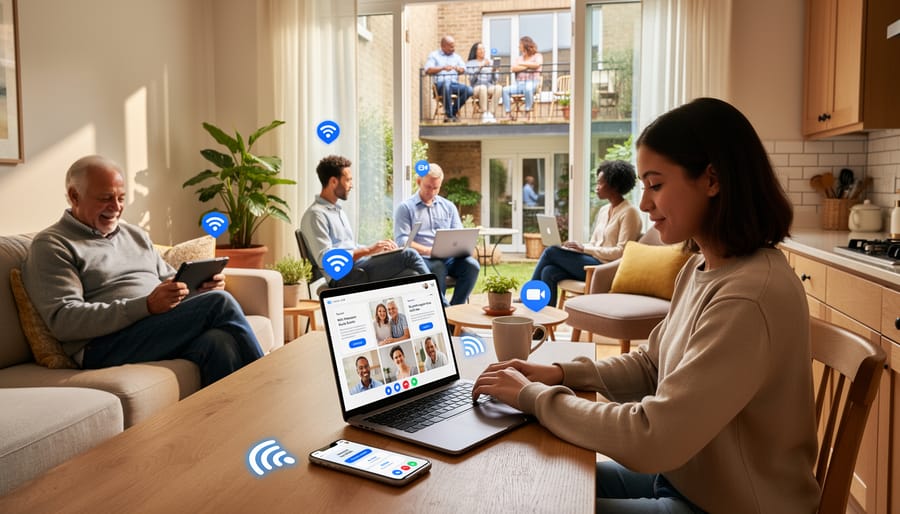
Fiber connectivity strengthens community networks in ways that enhance self-sufficiency. Distance learning gives residents access to skills training and education without leaving their communities. Telehealth reduces the need for long drives to urban medical centers, particularly valuable for rural and remote areas. Local organizations coordinate more effectively, farmers access precision agriculture tools, and community solar projects manage distributed energy resources through high-bandwidth connections.
Digital equity matters deeply for sustainable development. Communities without fiber access face disadvantages in attracting remote workers, supporting home-based businesses, and accessing essential services. Understanding why fiber matters for long-term community health helps residents advocate for infrastructure investments that align with relocalization principles. Adequate broadband becomes the foundation for economic resilience, environmental responsibility, and genuine community autonomy.
Understanding Fiber Internet Availability Maps

Fiber internet availability maps are digital tools that show where broadband services, including fiber optic internet, can be accessed across the country. The FCC National Broadband Map serves as the primary resource for this information nationwide, displaying where Internet Service Providers (ISPs) report their services are available. This data comes from the Broadband Data Collection (BDC), a systematic process requiring ISPs to submit detailed information about their network coverage and the types of services they offer.
The BDC displays fixed broadband availability for every Census Block and H3 Resolution-8 hexagonal area throughout the United States, creating exceptionally granular BDC coverage by block information. This level of detail allows you to see which broadband technologies reach specific neighborhoods and even individual streets. The map uses Esri’s ArcGIS technology to present this geospatial data in an interactive format you can explore by address, city, or region.
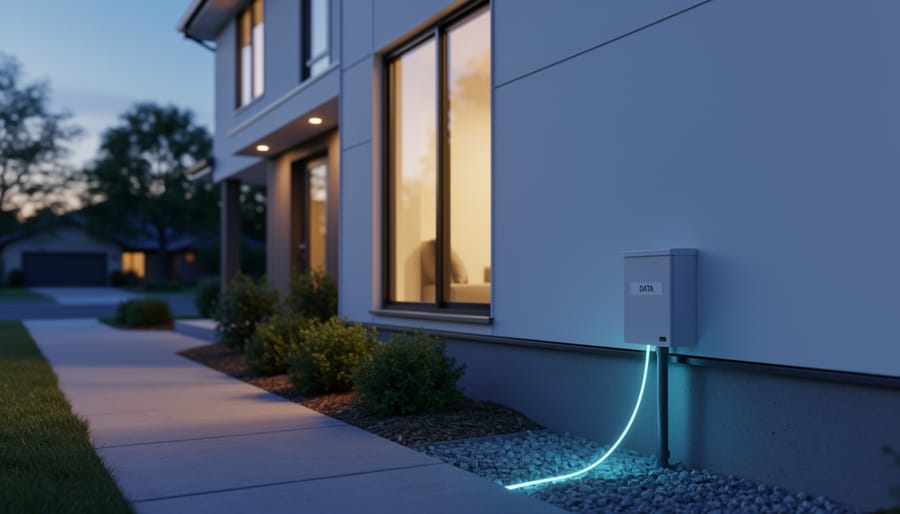
When you explore these maps, you’ll see different broadband types distinguished by their underlying technology. Fiber optic internet represents the newest infrastructure, transmitting data as light pulses through glass cables for the fastest speeds and most reliable connections. Cable internet uses the same coaxial cables that deliver television service, offering good speeds but shared bandwidth that can slow during peak usage. DSL (Digital Subscriber Line) runs over existing telephone lines and typically delivers slower speeds that decrease with distance from the telephone company’s equipment. The maps also show fixed wireless, satellite, and other connection types, each with distinct performance characteristics and availability patterns.
Understanding these technology differences matters for communities planning sustainable development, since fiber infrastructure supports the bandwidth-intensive applications that enable remote work, telehealth, and distributed education systems.
How to Check Fiber Availability in Your Area
What the Data Actually Shows
When an Internet Service Provider reports availability in a Census Block or H3 hexagonal area, it means the company claims infrastructure capable of delivering service exists somewhere in that geographic zone. This does not guarantee that every individual address within that area can actually receive fiber internet.
The FCC’s Broadband Data Collection uses these hexagonal areas and Census Blocks as reporting units, which can vary significantly in size. A single reporting unit might contain dozens or hundreds of homes. If even one location within that area can theoretically receive service, the entire zone may appear as available on the map. This is particularly misleading in rural areas where a fiber line might pass through a Census Block without offering service to most properties within it.
The map reflects what ISPs report, not necessarily what independent verification would confirm. Providers self-report their coverage areas, and these claims sometimes reflect planned capability rather than current, active service.
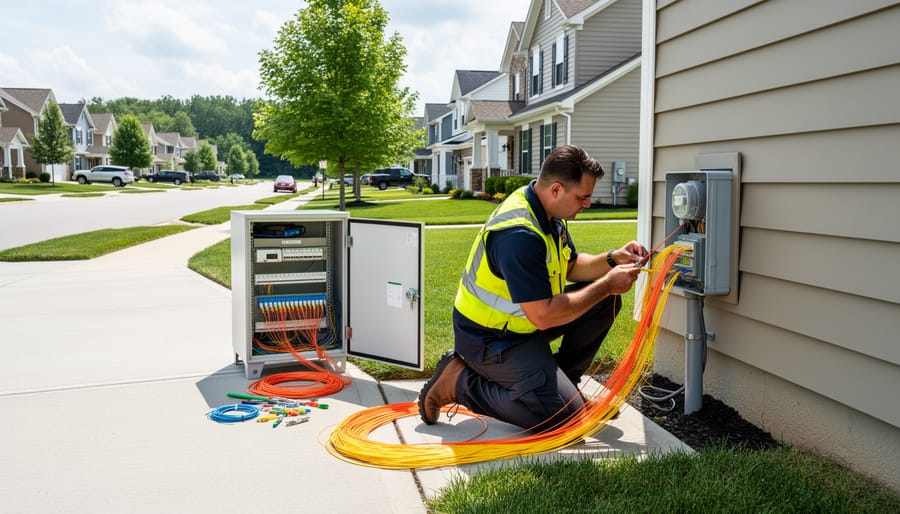
To determine actual availability at your specific address, use the map as a starting point to identify potential providers, then contact each ISP directly. Request a service availability check for your exact street address. Ask whether installation requires extending existing infrastructure and what costs that entails. This direct verification cuts through the gap between mapped availability and real-world connectivity options.
Beyond the National Map: Local Resources
While the FCC National Broadband Map provides nationwide coverage data, your state broadband office often maintains more current information about fiber deployment plans, grant programs, and upcoming infrastructure projects. Most states have dedicated broadband divisions within their commerce or technology departments that track local initiatives and coordinate expansion efforts. These offices frequently publish regional deployment schedules and maintain databases of providers operating in specific areas.
Municipal fiber projects represent another valuable information source. Many cities and counties now operate their own fiber networks or partner with private providers to expand access. Check your local government website or contact the city telecommunications department to learn about municipal broadband initiatives, construction timelines, and coverage areas not yet reflected in national databases.
County and regional planning commissions also track broadband infrastructure development as part of their economic development work. They can provide insights into rural broadband expansion programs, cooperative utility projects, and community-led efforts to bring fiber to underserved areas. Local libraries and community technology centers sometimes serve as information hubs for these initiatives.
Don’t overlook electric cooperatives and public utility districts. Many now offer fiber internet services alongside power delivery, particularly in rural communities. These providers can share detailed availability information specific to their service territories, including planned expansions and connection processes.
When Fiber Isn’t Available: Alternative Strategies
Living without fiber internet doesn’t mean accepting slow speeds or isolation. Communities across the country are finding creative ways to bridge the connectivity gap while working toward long-term infrastructure improvements.
Start by exploring what’s actually available now. Cable internet often provides adequate speeds for remote work and video conferencing, though it may not match fiber’s symmetrical upload capabilities. DSL service varies dramatically by distance from telephone infrastructure, but it can support basic connectivity needs. 5G home internet has emerged as a viable option in many areas, offering wireless speeds that rival traditional broadband without requiring physical cable installation.
For those committed to their location, advocacy matters. Contact your city council, county commissioners, and state broadband office to express demand for fiber expansion. Many rural broadband programs prioritize areas where residents demonstrate clear need. Document how current internet limitations affect local businesses, remote workers, students, and telehealth access. Concrete examples strengthen funding applications.
Community broadband initiatives offer another path forward. Some towns have successfully organized cooperative internet service providers or convinced neighboring municipalities to extend their fiber networks. These efforts require persistence and collaboration, but they create infrastructure owned by the community itself rather than distant corporations.
Join or form a local broadband advocacy group. Collective action carries more weight than individual requests. These groups can research grant opportunities, coordinate with neighboring communities facing similar challenges, and hold internet service providers accountable for promised expansions. Rural electric cooperatives in several states have successfully added fiber deployment to their infrastructure missions.
While advocating for better infrastructure, optimize what you have. Position routers centrally, minimize interference, and consider business-class service if working from home. Small improvements in existing connections can make the difference while waiting for fiber to arrive.
Community Success Stories: Fiber Access Driving Local Resilience
Chattanooga, Tennessee transformed from a struggling industrial city into a tech hub after deploying municipal gigabit fiber across the community in 2010. The network attracted hundreds of remote workers and tech startups, creating thousands of jobs while reducing commuting emissions by enabling distributed work. Local entrepreneurs launched sustainable businesses that needed high-bandwidth connectivity, from online education platforms to green technology firms, building a resilient local economy less dependent on single industries.
In rural Vermont, the East Central Vermont Community Fiber Network brought fiber to 3,100 unserved locations across small towns. Residents reported staying in their communities instead of relocating to cities for work, preserving local culture while reducing their carbon footprints. Remote workers who moved from Boston and New York cited reliable fiber as essential to their relocation decisions, bringing income and skills to support local businesses and community initiatives.
Wilson, North Carolina’s Greenlight fiber network enabled the city to attract clean energy businesses aligned with the region’s cheap energy future. The connectivity supported precision agriculture operations that reduced resource waste and enabled farmers to market directly to consumers online, strengthening food security and local economic ties.
These communities demonstrate that fiber infrastructure does more than deliver faster downloads. It creates foundations for self-sufficient communities where people can work, learn, and build businesses locally, reducing environmental impact while improving quality of life.
Common Questions About Fiber Internet Availability
Understanding fiber internet maps can raise questions that affect how you use the information and what to expect. The answers below clear up common confusion points so you can make confident decisions about your connectivity options.
How often does the FCC National Broadband Map get updated?
The FCC updates the map twice a year based on data submissions from Internet Service Providers through the Broadband Data Collection process. Between official updates, coverage information reflects what providers reported during the previous filing period.
If the map shows fiber is available at my address, does that mean I can get it installed immediately?
Not necessarily. The map indicates that a provider reports service capability in your area, but actual installation depends on the provider’s specific infrastructure near your property, installation scheduling, and sometimes construction requirements. Always contact the ISP directly to confirm service availability and installation timelines for your exact address.
What should I do if different sources show conflicting fiber availability information?
Start with the FCC map as your baseline, then check with your state broadband office or municipal authorities for local infrastructure plans that might not yet appear in national data. Contact providers directly as the final verification step, since they have the most current information about their network reach.
Does fiber internet cost more than cable or DSL?
Pricing varies widely by provider and location, but fiber plans often cost comparably to high-speed cable in areas where both are available. The long-term value typically comes from faster speeds, better reliability, and lower energy consumption rather than necessarily lower monthly rates.
Keep in mind that the map displays where providers claim to offer service, which operates at a Census Block or hexagonal area level rather than address-by-address precision. A single unserved home in an otherwise connected block still shows as having availability. This granularity limitation explains why verification with the actual provider matters before making relocation decisions or signing business leases based solely on map data.
When you spot gaps between what the map indicates and what providers tell you, consider submitting a challenge through the FCC’s process. Your input helps improve data accuracy for future updates and can highlight areas where infrastructure investment is needed. State broadband offices also welcome reports of coverage discrepancies, particularly in rural areas where accurate mapping directly affects funding for expansion projects.
Understanding where fiber internet is available, and where it isn’t, gives you the knowledge to shape your community’s future. By checking the FCC National Broadband Map and exploring local resources, you can make informed choices about relocation, business expansion, or advocating for better infrastructure. Access to high-speed internet isn’t a luxury anymore. It’s foundational for remote work, local entrepreneurship, distance learning, and the kind of connected, resilient communities that thrive with less dependence on distant centers.
If your area lacks fiber coverage, that’s not the end of the conversation. It’s the beginning. Join local broadband planning meetings, connect with neighbors who share your concerns, and explore community-driven solutions like municipal fiber projects or cooperative networks. When residents collectively voice the need for better connectivity, planners and providers listen.
View fiber infrastructure as essential as roads, water, and power, because in 2026, it is. The communities building self-sufficiency and sustainability understand that digital access unlocks opportunity while reducing environmental impact. Check your availability today, share what you learn with your neighbors, and get involved in shaping the connected, resilient community you want to call home.