A month or so ago Robyn put the final touches on a Peak Moment Conversation we videotaped last summer on our 2006 "Peak Moment Travels" in the Pacific Northwest. Once again we were with the "The Worm Guy" giving us a tour of his Vashon Island operations converting food waste into nutrient-dense worm poop.
We smiled and felt a twinge of longing to be back on the road, remembering how we wound our way through Oregon, Washington and British Columbia videotaping more than 80 programs organized by relocalization group coordinators and supported by the Relocalization Network. This blog chronicled that journey.
Back home producing a Peak Moment Conversation program each week, we are revisiting many people and places we taped. There's Sharon Abreu and Michael Hurwicz singing about the End of Oil, and Errol and Kathleen demonstrating the hand tools at Smith and Speed Mercantile (Orcas Island). Karen Biondo and Joe Walling of Vashon giving us a tour of their K-Jo farm, including the cute goats who kicked off the project. Sally Lovell exults about her electric-assist bike (Pt. Townsend). Otmar Ebenhoech's hot electric Porsche conversion created a stir in the electric vehicle online community.
That trip set some wonderful things into motion and kept us full-tilt busy, from a Peak Moment website to new presentations like David Korten's popular and accessible "The Great Turning." You can read about everything in our July 07 newsletter at www.peakmoment.tv/newsletter/0707.
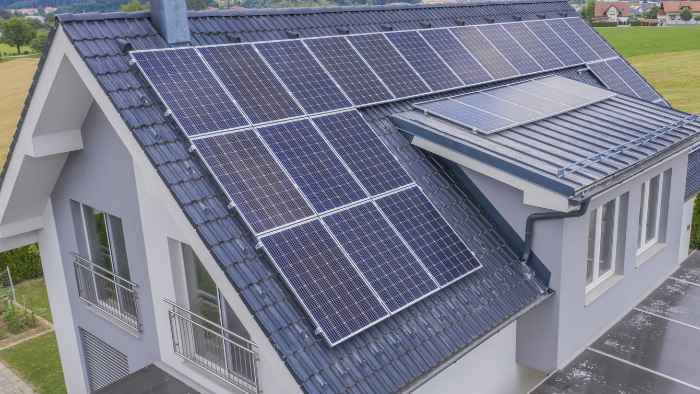
We loved our adventures on the road, and want more. On that trip we started dreaming of purchasing a used motorhome that would let us take longer trips, editing and producing shows along the way. It showed up last May. It's a "Walkabout" model -- isn't that a perfect name, fitting with our purpose? We'll be modifying her to put Robyn's editing bay in back, and a little office for me in the front. We dream of putting solar panels on the roof for extra electricity capacity. So getting her prepared is our big project for this fall and winter. I dream of a trip starting spring 2008 and heading East. Stay tuned.
But for when we can't travel, we just tried something new: we taped our first bi-local, transcontinental Peak Moment Conversation. It was with the filmmakers of "What a Way to Go: Life at the End of Empire." The idea came by email from someone we've never met -- Charles Allen of Asheville, North Carolina. He arranged for a videographer to tape Tim Bennett and Sally Erickson in Asheville, NC while Robyn taped me at home. We used a speakerphone to hear one another. Robyn edited all the tapes into one Conversation, which came out quite well, despite the strangeness of not being able to SEE one another. You can view the Conversation at www.peakmoment.tv/conversations/72.htm when it's online in a week or so.
Synchronistically, our "information warrior" friend Mary Nelson had a preview copy of the film, so we watched it beforehand. We were stunned. And moved to tears. Framed within Tim's personal story of awakening, this film brings together all the big topics of the unsustainable empire/civilization "story" in a personal way. It's visually rich, drawing from lots of archival films, cartoons, and even home movies; the music track underscores the moods perfectly.
You'll hear from Richard Heinberg, Daniel Quinn, Derrick Jenson, Thomas Berry, Chellis Glendinning, and many other articulate big-picture thinkers.
The film does not provide the "happy chapter" at the end listing "what you can do" to save the planet, but rather asks people to first be with their feelings of despair and grief: to sit with these before “doing” anything (jumping into action can be its own form of denial).
I think it's a film mostly for the choir, people who are already awakened to the serious events unfolding and ready to go deeper than intellectual understanding. Where other films have given us facts, this one slips in deeper -- to our core, to our feelings.I suggest you see it with at least one friend so you can talk about it later.
Right now Tim and Sally are on a Northeast tour, and are coming to the west coast in Fall. DVDs will be available soon. Go to www.whatawaytogomovie.com for more info.
Robyn and I have been reading aloud James Lovelock's The Revenge of Gaia. This planetary physician's prognosis for humans and the planet is more dire than we'd imagined. We feel an increasing urgency to continue in the awakening and lifeboat-building, given the accelerating news of climate change, again rising oil prices, and stock market meltdown. Watching the movie "Zeitgeist" a few nights ago stunned us into another bout with hard realities. Watch this one with friends, too. (www.zeitgeistmovie.com).
Late in September, we videotaped several Peak Moment conversations in San Francisco after the meeting of the regional Post Carbon groups--with
*Post Carbon folks Dennis Brumm, Richard Katz and Alyse Heartwell
*SF City environmental program folks Melissa Capria and Cal Broomhead
*Jan Lundberg, just coming off a cold
*Michael Shuman, author of The Small-Mart Revolution
*Don Shaffer, Executive Director of BALLE (Business Alliance for Local Living Economies)
And more. So this is a placeholder for more news about that journey.
And then in November we journeyed to Pine Mountain Lake (north of LA, east of Santa Barbara), invited by relocalization organizers Sarah and Paul Edwards, to make a presentation about localization based on our Peak Moment conversations.
We headed west to Santa Barbara where we videotaped
*Tam Hunt, with Community Environmental Council on their "Fossil Free by '33" plan
*permaculturist Larry Santoyo
*landscape architect Owen Dell with his visionary "neighborhood foodshed" project
*Larry Saltzman, permaculturist with a food forest in his backyard
*Russ Teall, owner of Biodiesel Industries
*Karen Flagg and Don Hartley with Growing Solutions, who are restoring a landfill
*students in the sustainability club at Santa Barbara Community College
*and several more folks
And then in San Luis Obispo, we videotaped
*SLO Smart Energy Summit
*Bob Banner of Hopedance
*Tylor Middlestadt a Cal Poly student environmental leader
And finally in the Monterey Bay Area
*Deb Lindsay, Peak Oil activist in Pacific Grove
*David Blume on ethanol
There are stories abundant around all these people and places. I'm hoping to fill them in...when I have a moment. For now, this is a bookmark in my blog journal of Peak Moment Travels.
Preface
Over a year ago, a man quietly commented after a public showing of "The End of Suburbia," "Where are the women? All of the Peak Oil voices here are men."
I'd noticed that too, and not just in the Peak Oil movement. Everywhere in our culture, women were often in the trenches doing the work, while men were ably articulating what was going on. Men's voices are given more credence. They're the authorities. Women have to be really assertive, and still are usually not given equal credence. I think that perhaps the changes we need to rebuild our communities in the face of peak oil and climate chaos will be the very skills that have been undervalued in our patriarchal, hyper-individualized culture-- women's personal and social skills.
In our travels videotaping Peak Moment Television shows in about a dozen communities this past summer, I saw that some of the most functional relocalization groups were being led by women, or by women and men sharing leadership roles.
I wondered: How could we raise awareness and articulate women's form of leadership and values to rebalance the leadership models in our male-dominated culture? My answer came when I had a Peak Moment conversation with Anne Oliver of Ukiah. A facilitator, coach and mediator, Anne was on the same page. I promptly invited her to facilitate this conversation, which occurred the evening of a day-long networking meeting of northern California Post Carbon and related groups and individuals in September 2006.
Notes from "Women in Peak Oil" conversation
September 30, 2006, San Francisco
Facilitated by Anne Oliver (Ukiah)
Circle of Women
DL: Deborah Lindsay (Pacific Grove)
EB: Ellen Bicheler (Petaluma)
MM: Melissa Moss (Pacifica)
IS: Ingrid Severson (Oakland)
JD: Janaia Donaldson (Nevada City)
RM: Robyn Mallgren (Nevada City) (
This transcription begins partway into Anne's opening remarks. [bracketed text are my edits. JD])
AO: In times of crisis, people tend to regress. When they get scared, they fall back on traditional patterns to feel safe. In times of crisis: we feel we need a man.
When I went to Willits and saw Jason and Brian running WELL, [I wondered where the women were to balance that male leadership.] I coach women wanting to assume power, especially in the political arena.
I think there's a call in the world. The women are gathering. Indigenous women are gathering. What are we being called to do? Where are women's [skills in] relationship being recognized as leadership?
As a professional mediator I notice the best mediators are women. Why? What makes women leaders? What would women's leadership in a progressive movement look like?
Is gender equity going to be a primary value in GULP (Greater Ukiah Localization Project), for example? Interesting that not everybody assumes "of course." If we espouse a return to more organicity, than why wouldn't we have gender equity? The sexes are 50/50, after all.
In the research, almost everything that comes up is rights-based. We need our rights. It's a Victims Story. The story we tell ourselves matters a lot.
Appreciative Inquiry is a way to re-imagine ourselves. Men have traditionally had leadership roles in the public domain; women in private. Where those roles intersect is community. This tends to be where we have the most equity--in public roles like mayors.
The unregulated male impulse is what got us the way we are. The Seneca and Ogananda knew the women were needed to declare war.
What do we see as leadership? What are the models? How do we build it? Not from a Victim position. I think Women's leadership is difficult. All the research on stress hormones and brain activity and instinctual responses in crisis and under stress, was all done on men. When they studied women, they found that oxytocin is also found. Women Tend and Befriend. Men gravitate towards Flight or Fight. Because women haven't had power in the public domain, we've gotten power by linking horizontally. Women have gotten their strength by women grouping together. It's the inclusive, relational way that women are.
So when a woman gets promoted, women are threatened. We take pot shots, get jealous. That woman breaks the mold in a male model. If she rises, she must take special care to keep relationships with the women she's risen above.
What I've been doing with groups of women is to tell each other stories. The narrative mode is more naturally female. Male language is more instrumental [results-oriented]. That's Appreciative Inquiry. How do we do this in a way that isn't reactive? At a recent event, all the awards for selfless awards went to the women. All the great thinking awards went to the men.
Where our attention is and what we gain insight about, is what we're likely to have more of. So what would shared leadership look like in our Peak Oil movement? What are our best experiences of shared leadership? Shared leadership of the kind we want to see in the world. What can we do to make women's leadership normalized in the world?
Deb's Story
Deborah: I do monthly outreach groups. My counterpart is Mark Folsom. He answers all of the very technical questions. (The instrumental questions). I do the inspirational, we-can-do-this mode.
Ellen: Have you talked about that, your roles? Deb: No we haven't talked about it, but afterwards we both feel vitalized. We're never in competition. We give each other space to talk. We agree to disagree but are respectful. Men nod when he talks, women nod when I talk.
Anne: You share equally the space to talk, and offer [information of different types.]
Deb: We're both solid on our understanding of the problem. I heard David Cobb make a presentation, and had a much younger woman speak also. I wanted to uphold the idea of a female and a male presenting; trying to get age difference as well. We haven't broken into the Latino community yet.
Anne: Before we go further, let's clear the center of the table--so the center we hold is clear. (We moved away our books and purses, etc. Anne placed an heirloom tomato at center, and a stone and a grapefruit. Honoring gifts from Mother Earth).
Anne (to all): Working with Deborah's story, what was most compelling to you?
Melissa: It may have been a more intuitive process to create the teamwork.
Deb: It's not just about results, it's also about making it a bigger (personal) experience for everyone involved. It's tiring and rewarding at the same time.
Anne: Notice that in telling her story, then she got closer to what makes for shared leadership.
Melissa: Inclusive.
Robyn: The sense of comfort in both of the roles. Each person's role was fallen into or carefully chosen, but they fit the two players. A naturalness. Each coming from their gift.
Deb: For me, the work of studying peak oil and global warming is so depressing. Lovelock says if the Kyoto protocols go through, we're actually speeding up our global warming. I said to my husband, "We're just managing our process to hell." But finding those little human moments makes it so worthwhile. I had one of those moments today. Somebody said some little thing, and I got "that's why I put on these [Northern California Post Carbon Network quarterly networking meetings].
Janaia: I observe that you are process-oriented, not about results.
Ingrid's Story
Ingrid: It is hard not to be depressed. I'm still processing this kick-off meeting I hosted last week. I've been organizing, gathering interest, checking in with other professionals on this Rooftop project. I sent out a big email to everybody inviting them to this meeting. It was a make-it or break-it moment; I finally had funding for my position.
There were about 15 people, a decent number. [I was] in the leadership role; it's more of a facilitation than "leadership" role. This project is going to be implemented by volunteers. I gave a PowerPoint overview of the project of Roof technologies, then opened it up to the group. I tried to recruit volunteers. I said I was looking for people to research building codes, policies, etc. [and wasn't getting much response.]
So I tossed the ball out and then it occurred to me to form the group as a round, to make a circle, have them say what they were willing to do or what interested them. Everybody wanted to plug in in some way, though not necessarily the one role I had put out.
Anne: What made that a successful example of leadership?
Ingrid: Humility, receptivity to how people want to respond. Get their input before trying to make a lead. I'd had everyone introduce themselves first. Didn't try to shove something done their throat. Got their involvement.
Ellen: Forming the circle. Anne: Not preplanned, it came out of the moment.
Ingrid: Right, like finding light in a dark room.
Deb: You made a shift, and suddenly you had people want to sign on. That was affirming to you.
Anne: I noticed that you were comfortable with ambiguity of not knowing. When they didn't do what you'd first conceived, you saw what needed to happen. You respected their freedom. Gave them an invitation. Out of their own self-interest, they signed up. Like Carolyn Casey: invite them to the opportunity.
Deb: True leadership is quiet and humble.
Melissa: Humility. A trust process.
Anne: If quiet and humble, how does it get recognized as leadership?
Robyn: That's part of the problem: it often doesn't get recognized when it's quiet.
Deb: You have to go in with the intention of being the leader. You can be quiet and humble without being a leader.
Ingrid: I've done things like this before where it's been co-opted, somebody wants the spotlight. It's amazing that this didn't happen. There was a lot of respect in the room. There were strong leaders but they didn't grab the spotlight.
EB: A lot of respect in the room. Your self-respect was there, too.
AO: Your respect for them. Like a leader, you outlined the desired outcome (people understand what was needed). You had an end in mind (people to sign up). You left them free as to the how.
JD: You invited others to participate, not to just do it the way you wanted.
IS: Reminds me of the process Brian Weller & Jason Bradford have done. What to do when someone tries to throw it off.
AO: What did you do?
IS: Presentations help, esp. with a visual. I covered my background. My vision. I set the stage. I felt like a force spoke to me. I actually had stage fright.
AO: I heard competence. You established competence and strength and something to be respected. RM: An inner strength you didn't know you had.
MM: Resourcefulness.
DL: I have to modify the "quiet and humble." I still need approval. If I don't get it, I feel I haven't done well. I like that you were grounding yourself beforehand. A lot of people ground themselves before doing public stuff. I imagine myself as a vessel, energy coming through the top of my head and out of me. And it's about caring so much that you don't care any more. You care so much about the issues you're on that the other (smaller, personal) issues don't work.
AO: So it's not about egolessness. Women's invisibility. What is it about wanting to be recognized--I'd like to be seen?
Janaia's Story
Janaia: I like to be seen for my contribution. I can see that in my role as host in our Peak Moment Television Conversations. I feel like I'm a facilitator, evoking what people want to share. I want to empower them. So our conversation is a conduit, and I'm the director, the navigator. It's a sacred charge. I/we are holding the people. How does that get recognized as leadership? Yes, we [in this room] see this [facilitative] style as leadership. How do we get it articulated as leadership?
DL: It's important to be seen as a leader.
JD: We're trusting the moment. Letting ourselves be spontaneous with whatever comes up.
AO: Notice that these are conversations, not an interview. [In a conversation] we build something together.
JD: Yes, my point of view does show up.
MM: You multi-task. You're thinking of the viewer, the person you're conversing with, and where you are too.
JD: It's a "We" orientation, not a "Me" orientation.
DL: You have multiple objectives, too: motivate listeners, educate listeners, be with the guest, keep the flow, maintain the objective.
JD: How I focus is that we have an outline of what we'll talk about, a basic structure, but I flow with what comes up in the moment, following where the energy is.
AO: What if we got better at articulating about how we're going to work? We're talking about structures that are human, not about controlling but facilitating the Life that wants to happen. The lone model of leadership is male. Women's model of leadership is WE. Fundamentally about WE. It's a big struggle in our country.
DL: In fact, it's THE issue. When we look at the movie "The Power of Community: How Cuba Survived Peak Oil" it was because they were from a WE, not a ME. Going from individualist to collectivist mentality is central.
AO: We don't have a lot of models for what that form of governance looks like. I think it's up to women to recognize and articulate about it.
RM: Janaia is spontaneous. We've talked for years about that's being one of her strengths. I'm impressed by the complexity of all that she was tracking. My sense is that this has come almost naturally, even though she has honed it. A real strength of spontaneity is flexibility, responsiveness to life (what's happening right now).
DL: That's a mother thing. Jumping tracks. Switching modes.
AO: How do we articulate this?
DL: Can we be so bold as to create the Women's Postcarbon Leadership Council? Within our own communities. What I'm doing is forming the new leadership there.
AO: I see lacking in Peak Oil movement is a lack of sophistication about these forms of governance. I see a lot of urgency in this movement, and yet using the old forms.
DL: Actually what we're doing at Sustainable Monterey County is forming the next city council that'll replace the current structures.
Ellen's Story
EB: A couple of weeks ago I learned our Powerdown Project was going to get to do a workshop at the Community Solutions weekend. I felt panic at first. Were the students really ready? They had just done their presentation at SolFest, and they were very empowered by it. There at the event, I began to panic again. Here were 300 people! Even though our workshop was one of the six breakout groups, ours was the best-attended! We practiced a lot. The students didn't go to the dance. It turned out to be more spontaneous than we'd planned. Once they were doing it, it flowed. They received a lot of info to further them on their project.
AO: What made it shared leadership?
EB: I had to convince myself of my worthiness of my leadership. I knew the students were shaky, not quite ready before we left.
AO: What made the difference?
EB: I feel I had empowered the students that whatever happened was okay. That they were grounded in what they were talking about.
AO: What made their workshop so well-attended?
EB: The students' confidence and networking with a lot of people there.
DL: You really hold those students.
EB: Right afterwards, we came together and the students had a card and gift for me. And I received individual acknowledgments from the students.
AO (to all): What do you hear?
DL: You have to be bold.
AO: I heard the commitment to the students.
JD: You were advocating for the students.
MM: You stayed focused on getting what you needed for help.
AO: We are more powerful in negotiations if we're advocating for others (that comes out in the research on women). This was a step up for you. It's not just about you. It's about WE.
DL: In Peak Oil, we're up to bat for someone else. I'm almost inconsequential. Here we are advocating for the future generations, and the planet.
AO: It's a WE. Part of the WE is "I." " I" don't disappear. I'm part of the WE. In the culture that has championed the culture of individuals, that's a concept that hasn't had primacy.
I also heard that having raised the bar (by going to this event), the students had to work for it. They worked, and yet then some spontaneity could happen in the workshop. You were guided by key principles: networking, empowering.
EB: It's becoming more important to me to be seen. I'm wanting to have my voice, to speak out more. I've been timid in the past. Speaking out more. Shepherd and others in my relocalization group are supporting me.
AO: It's okay to ask for support in assuming more leadership.
EB: I felt empowered by what happened there. It's building momentum.
Robyn's Story
RM: My shared leadership happens to be in Peak Moment Television. I'm jazzed about the relationship the two of us have in pulling this off. Not thought of myself as a leader. I have shied away from anything that smelled like leadership. Here we've each found what we love. Behind the camera I am finding an art form, creativity. Being the person who makes those decisions without drawing on someone else is new to me, or at least being in that position has felt uncomfortable. In this adventure, it feels totally comfortable. I look forward to each challenge: I'm loving it. We each have found roles where there's no conflict. Everything gets covered. A comfortable, sharing co-creativity.
EB: I love "co-creative." That's a wonderful word. (To all) What do you hear?
IS: I hear an unexpected level of comfort with this leadership role.
AO: Reciprocity and mutual support. Informing each other's leadership.
MM: Partnership. Within that sense of security you can tread on each other's territory.
RM: We worked together at Xerox, but there wasn't this sense of partnership.
AO: It's in the service of the Creation.
DL: That form of creation is very special and can be overwhelming to very many people. If you get to that point of power, it's strong.
AO: Isn't that what it's going to take to have the leadership? Where most conflict comes from is "it's my way or it's your way." I can smell in a meeting when somebody has an idea that's premature, that comes instrumental thinking, e.g., assigning volunteers. It comes out of my own idea, it causes a reaction against other egos. You're talking about putting it together in a way that is natural. The [question is] HOW [we put it together in a natural way]: we don't know that.
JD: The pre-structured plan doesn't work.
AO: How do we skim it off the top?
EB: I like your talking about this as an art form.
AO: It frees people to feel like co-creators.
RM: I hide the fact that I hide. And Deb caught that. I like that she saw that part of my truth.
MM: The feminine model. As a woman, I am very curious about people, or about experience. Of course, it's not complete until we've all shared.
Melissa's Story
MM: Like what happened at this community feast last August. Before then, we'd done Life Force Cafe events (all raw foods, etc.) and I'd come home starving. I wanted to have a fun, bustling feast. I partnered with a woman doing an e-coop. This woman and I, it was co-creative, it took off, got bigger and bigger. It snowballed, got bigger and better. Took on a life of its own. On the day of the event, there were volunteers who'd come to previous similar (Life Force Cafe) events. I felt I was getting tested: we were doing it differently from that. One volunteer had "this is how we do it" attitude. I found myself backing down. I let go in that moment. I stayed busy in other areas and let her do things as in the past. It was enough to let happen what we'd given birth to.
AO: What represented the kind of leadership?
MM: Collaboration. People tapping into the concept, letting it build. I love it when everybody's two cents is thrown in. More than just one person.
AO: There was common vision, everybody having their role. Very mother-like role. You respected the life of the event. You let it be alive.
EB: I heard fun, celebratory.
AO: So what are we hearing about women's form of leadership?
* Keep the energy moving, but in a shared direction. Letting go is a big theme.
* Leadership isn't micro-management.
* It's faith-based and informed delegation.
* It's important to know what matters (and what doesn't). That's the basis for negotiation. That way you can give up things that don't matter.
*When you know what matters, you're clear on what is important to you. What you're willing to do and not to do.
*Women are graduating from selfless legwork behind the scenes to acknowledging the worth of our time.
Key Themes
*It's about the WE, and that includes the "I."
*Collaboration, co-creative, the common vision.
*Know what matters.
*Acknowledge and honor value of time.
*Structure with fluidity. (e.g., plant model: there's fluids moving within the structures). Have organizing powerful concepts or frames, clear structure, guiding principles that are living and meaningful. But let things unfold organically. That way there's still freedom.
*Have fun!
Anne: How would you tell people about what we were doing tonight? We're developing on behalf of everyone a more consonant model of leadership in the Post Carbon movement. We are balancing male and female modes. It's
* Articulate shared leadership.
* Nurturing
* Vibrancy.
AO: What's different for you now?
RM: I have a sense of this alternative. I also see that where we hit the wall with one individual is the challenge we face.
JD: I feel nurtured. It's moving towards birthing.
IS: Feels like a becoming.
AO: It was a really living conversation. Very relevant topic to us, and to the world. We are opening and listening.
MM: I'm glad I came. Hopefully I can have a more objective view in my role on a project, encourage another's participation. To rearrange my thoughts about male-style leadership. Thank you, Anne, for shining a light on these--they were already there.
EB: I appreciate your leadership in all this. This is a synergy of all of us. We interlap at different places. This feels like a new territory, a new way of thinking. Exciting!
DL: I still have questions about leadership, and why I'm interested in being a leader. I want to think about the next time we're all together. Maybe we could do something really fun like stay overnight in SF, maybe even be luxurious in our deliberations!
Epilogue
We welcome further discussion on women's contributions to leadership, visioning, and the inner and outer changes needed in our world. We plan to meet in person again probably in the fall of 2007.
======================
White Oak Farm & CSA
=====================
Late Sunday, August 28th, we wound our way through the gently curving roads in the dark, at last finding the sign that led us uphill to White Oak Farm and CSA near Williams in southern Oregon west of Ashland. Only as we left in daylight did we see the expansive pastures rising uphill to the gardens, the barn/community building, and further up to the straw bale-cob residence under construction. We parked our van beneath the oaks and fell blissfully asleep, happy to be in familiar-feeling quiet woods.
The next morning we set up our cameras inside the Common House, a two-story barrel-shaped strawbale structure, while several young people set to work plastering an interior wall. The building's exterior wall curves around a huge central tree-trunk. An upstairs loft looks down into the main room and kitchen areas. As we set up our cameras, a few ducks wandered by.

The White Oak Common House
With plasterers working in background, we taped a conversation with Stacey Denton, who along with Taylor Starr and Eli Sarnat formed the White Oak Farm CSA and Educational Center. Stacey wanted to put into practice what she'd been studying in environmental sciences. After taking a Permaculture course with the Bullock brothers on Orcas Island, she and two others found this land, a perfect south-facing plot much of which was already cleared and in pasture.
They worked with a local Land Trust to hold the land while they raised money to pay it off. They've put conservation easements on much of the land, some of which is forested. They formed a non-profit organization and have sponsored educational programs for school children, as well as providing courses in natural building techniques in association with building the straw bale residence. They envision adding photovoltaics for electricity to supplement their grid power.
White Oak formed a CSA farm (community-supported agriculture), planting hundreds of orchard trees as well as a garden of row crops. They keep ducks, chickens, goats and honeybees. Interns work with them in the busy season, and then the farm and its residents take some rest during winter, in keeping with the earth at that time.
Whew! That's a lot accomplished in a very few years! This is still a work-in-progress, as it will likely be for many years to come. White Oak models a small-scale sustainable, intensively-managed, organic, permaculture-based farm that we need multiplied a million-fold across North America. That it's also an educational center harbors the promise there'll be training for many new farmers yet to come
It was hard to leave Portland--so many more Peak Moment possibilities! But we headed south on Saturday, happily eating fresh berries from the People's Food Coop.
=============================
Northwest Permaculture Gathering
=============================
We briefly visited with long-time friends in Brownsville and then landed in Eugene for the Northwest Permaculture Institute's weekend conference at the Dharmalaya center. The large back yard was full of people! We were warmly greeted by friends we'd met the month before when we taped Peak Moment shows with some of them: Doug Black, Jan Spencer, Krishna Singh Khalsa, Ravi Logan, Jason Schreiner, Guy Prouty, Sue Supriano, and Tom Schneider.
The grounds outside were nicely laid out with hay bales for seating, a community bulletin board, literature tables and folks were lined up for a vegan dinner prepared in the outside kitchen. Behind and around the sanctuary building, the grounds are being planted using permaculture design principles, including a bioswale to capture rainwater and fruit trees.

Dharmalaya Center, Eugene OR - view of the back through the gardens
We set up our equipment in the sanctuary to videotape the evening presentations of a number of interesting projects in the area that emphasize LOCAL -- a food packer of local organic produce, a sustainable-business directory, a permaculture educational center, and more.
I spoke about our Peak Moment television programs, our travels and tapings this summer. When I named our vision of taking Peak Moment On the Road throughout the country, taping and producing programs so that we can hand the finished program to our guests before we head to the next community. I got some uplifting supportive responses in the room -- hurrah!
We camped our Vanagon for the night near the home of our hostess Sue Supriano, and were up early in the morning to participate in the first session, a Media Track that Sue had organized. A longtime SF Bay Area activist and media maven, Sue has recently moved to Eugene from Berkeley. For over twenty-five years she's been an independent media producer of audio interviews on a wide range of topics in environmental, political, peace, Peak Oil. You can catch her programs on www.suesupriano.com, including one she did with me later that day.
During the media track, we also heard from independent producer Amy Pinkus Merwin, host of a Eugene radio program and visionary/ supporter of media projects in the central Oregon region. We showed our Peak Moment Highlights video, and Sue showed a video about a low-power FM station installed and running during one rainy week in Nashville.
==============================
Looking for the Peak Moment Mobile
==============================
We spent Sunday night parked in Tom and Victoria Schneider's driveway in Eugene. Tom sells RVs for a large nearby RV sales outlet. Last June he spent several hours showing and educating us on the different types and sizes of motorhomes.
We had a warm and nourishing breakfast with Tom and Victoria, including local grass-fed beef, local eggs, and vegies from their garden. We share with them the experience of being nourished by traditional foods including high-quality fats like dairy and coconut oil. Robyn's slender body-type and metabolism especially needs high-energy foods: on the road she has turned to Tahini, almond and dairy butters, meat, eggs, avocado, and Kettle potato chips. Well, we know that last item isn't the best nutritionally, but it worked in a pinch.
We spent most of Monday looking through the new and used motorhomes. Bit by bit we are clarifying what we want: a diesel pusher that is 38 ft. long on the inside, and 25 ft. short on the outside. Hard to find! :-)) Add to that a compactly-sized bathroom, a slide-out with sofa-bed for an on-board studio, highly-efficient space-saving storage. After we put the photovoltaics on the roof, we add electric vehicle capacity. Well, we've found that we don't fit the standard profile they're designing for! Any mechanical geniuses out there that want to help create a prototype biofuel flexfuel electric motorhome?
=========================
BioFuels -- Fill 'er up along I-5
=========================
Speaking of biofuels! On our way out of Eugene Monday afternoon, we stopped to tape a Peak Moment conversation at a new SeQuential Biofuels retail station and retail store that's being built. Ian Hill is one of the founding partners of SeQuential, going back to his student days making biodiesel in the garage. He and partners put together a business plan and began to develop a market for biofuels. Right in time for energy decline!
Their retail outlet will carry both biodiesel and ethanol in different grades. SeQuential's vision is a string of biofuel stations along the I-5 freeway from Canada to southern California. In answer to my question, Ian replied that biofuels cannot totally replace gasoline and diesel, which we consume in such enormous quantities -- but they can assist in a transition towards renewables.

SeQuential Biofuels in Eugene - soon open along with Big Oil
SeQuential is walking their conscious-about-energy talk. During the conversation, solar installers behind us mounted photovoltaic panels on huge racks that'll be the roofs over the pumps. A living roof will be planted on the retail store roof. Inside they'll sell some locally produced food and baked goods. Their refinery in Salem converts used vegetable oils. As the sun dropped in the west, we wished Ian well and packed the Vanagon to head south for our next day's conversation.
Next: White Oak Farm CSA and Education Center in Williams, Oregon.
Saturday was our day to head south. But Portland wasn't about to let us slip out so easily. Or at least Daniel Lerch wasn't! Our packed scheduled hadn't permitted for a moment to sit down and chat with Daniel, so we met for breakfast at the bustling Utopia cafe whose blueberry pancakes were sublime.
===================
At the Women's Temple
===================
Since we had a few hours before our next destination, Daniel seized the moment and led us on a wild and delightful whirlwind tour of special places in Portland. We visited the cob building being reconstructed beside the Women's Temple, a house converted solely as a women's sacred space. While Daniel chatted about persimmons and other gleanable fruit trees with the knowledgeable street man, Robyn and I were welcomed by a young woman to quickly tour through the house painted in dark, rich colors.

Cob building in process
I was intrigued by a small shop in front of the Temple house called Shining Arcana, filled with shiny objects like semiprecious jewelry. I loved the inclusive spirit in their flyer: "goth punk retro rennfaire pagan lovecraftian victorian techno outsider insider queer straight friendly." I don't know what all those terms refer to, but its spirit of inclusiveness seems cosmopolitan and welcoming. Around the globe, can we find our way to do that instead of the "Us vs. Them" fires of tribalism being hotly fanned in so many places, most visibly now in the Middle East?
===================================
Portland Re-Building - Salvaged Materials
===================================
Daniel led us across town to the enormous Re-Building buildings, stock-full of re-usable building materials. We had videotaped conversations at RE Store in Bellingham, the smaller cousin inspired by Re-Building. Mark Lakeman designed the new addition: we delighted in the wall of windows of varying sizes and shapes (all salvaged, of course). And the cob-crafted entryway with tree-pillars extending to steel beams, blending the natural and human-built environment.

Entry to the Re-Building store
A water feature slowed the movement of rainwater to the storm-sewer system. It was fronted by a playful, inventive ironwork fence made of wrenches, pipes, hardware fittings you'd find in the store. Not simply a store, this is a community gathering place. Inside the building were places to sit, and a large set of display boards for a myriad of flyers and community notices. I could've spent hours wandering the aisles of porcelain bath fixtures, lighting fixtures, hardware knobs, cabinets and furniture, paint and tile, grilles and appliances--endless wonders each with stories to tell.

A playful tool ironwork fence
We have so much wealth we throw into the landfill needlessly! Where are the Re-Building stores in every community?
(Synchronicity note: I'm writing this as we're going through Chico. On our way out of town, Robyn spotted a "Re-Store" sign and whipped back to check. Sure enough, a Re-Store sponsored by Habitat for Humanity. It's happening! Onward to Every Town!).
(Post Note: I'm posting this back home after learning a Re-Store-like business has just opened in our own community. Maybe we're at the tipping point to RE-Store and Re-Build our world!)
===================================
Natural Foods Coop: built for sustainability
===================================
Portland's Re-Building isn't the only commercial space that's creating community space. Daniel led us south to the People's Food Coop. Located on a corner in a residential district, this new building incorporates some wonderful features: a big open courtyard out front for the weekly grower's market and other gatherings. A living roof. Bioswales to let rainwater percolate before going into the stormwater system. Corner traffic-calmers. A colorful bottle-glass cob wall. A spacious community meeting room upstairs.
It was sustainably built, as their brochure proudly notes, listing a ground source heat pump, solar chimney, water and energy efficiency, building efficiency both in materials and operational practices. This "community model of green building and sustainable business practices" reminds me that our own Grass Valley Briar Patch market's new building -- now under construction -- will likewise be such a model.

We had tried unsuccessfully for days to reach someone to give us a Peak Moment our of Dignity Village. Failing that, we drove there and received a marvelous personal tour that we did not videotape. It was the most moving destination in our journey. This entry was written that same day. Today, on our next-to-last day in Portland, we have experienced community in two different forms that presage, I think, some of the forms community will take in our urban lower-energy futures. One is a village of homes for once-homeless people. The other is a neighborhood community.
=========================================
Dignity Village: Home for the Formerly Homeless
=========================================
The sun came out this morning, beckoning us northward to the asphalt-covered Dignity Village site not far from the Columbia River. On one side is the city's composting/mulching operation. On the other, a corrections facility. Fenced in between, Dignity Village is colorful, haphazardly creative, vital, and anything-but-institutional.
Gaye greeted us at the small shack at the driveway to the village, and proceeded to regale us with history, stories, wisdom, humor, personal observations, and political critique. An activist in the '60's, she had been made homeless by health problems. She started our tour by recounting the abysmally inadequate human services provided in the city: shelters with insufficient security, long lines for the food kitchens, the endless wait to get a bed for the night when there are many times more homeless people than available beds.
About 38 people live in this almost one-acre village. The villagers have their own non-profit organization, board of directors, rules (like co-housing, it occurs to me). The city permits them to build a shelter 10 x 12 feet for one person, 10 x 15 ft. for couples.
We toured the Village, passing a dozen college student volunteers removing nails from salvaged lumber. Committed to sustainability, Villagers have tried cob--too much upkeep required--and now mostly build stick-built homes with salvaged materials. They're all built on platforms--high enough to remain above winter rainwaters pooling on the asphalt basin, easy to move with big forklifts. Colorfully painted, with boxes for community gardens--each member has his/her own individual expression. They help each other build, but they each have their own place, plus a large communal building. Together they buy propane for hot showers, several portable toilets, electricity. They pay their own bills, they bought their land.
Provisional prospective members live at least one year in camping tents pitched on a raised platform and covered with a rain tarp. Members have to agree to five basic tenets: no violence, no theft, no drugs or alcohol, everyone has to be financially self-sufficient, and must work a certain number of hours for the common good, the Village.
The ethos behind this Village is respect. Respect for one other, respect for the place. "These are the rules we learned by age three," Gaye quipped, "but a lot of us have to relearn them." Like any collection of humans, they have their squabbles and challenges. But here, they also have their dignity. They are not a drain on society: they work and go to school, pay their taxes. They live modestly; but they live, truly, as a village where everybody knows everybody else. Their goal is to help other tent cities of homeless people, to do as they're doing. Why others haven't succeeded, Gaye said, is when they allow alcohol and drugs. Those breed theft, and violence, and the authorities are only too ready to shut it down.
Perhaps these once-homeless people are paving the way for others with more financial means to learn, to relearn, what it is to build and to be community. They are certainly living with a small footprint and more contact than most of us get with our neighbors. We left with our hearts deeply touched at Gaye's poignant stories of lives reclaimed, land brought alive, of people enlivened with self-respect and dignity.
==========================
A Farm Oasis in Urban Portland
==========================
When you drive down the urban residential street, you turn into the driveway between two apartment buildings, and come to a white gate at the gravel driveway. A friendly barking dog greets you. Islanded in this urban landscape you find huge walnut trees, a three-story farmhouse, and part of an acre of land planted in fruits, vegetables and flowers. Pam and Joe Leitch call this Portland Permaculture Institute, where they teach and put into practice soil-building, growing, preserving, collecting rainwater, closing the loops to end waste. They also call this "Home."
We taped a much-too-short conversation including both of them. Pam described the life-changing effects of Joe Dominguez and Vicki Robin's book Your Money or Your Life, which moved them out of corporate America and into reading and studying the state of the world. Led them to working on resource decline, to Pam's working with the Portland Peak Oil group. Last year she and several others conceived of and brought to their city commissioners the Portland Peak Oil resolution, which passed unanimously. Now she's helping to support the Peak Oil Task Force which grew out of that resolution, a group of about a dozen volunteer citizens who are tackling the job of making recommendations to the city about what they could do in the event of chronic energy decline and economic repercussions.
Joe's five-minute verbal tour of their gardens touched on the building of neighborliness. Wanting to cut down poplars that shaded their garden, they met with neighbors at the adjoining apartment house. Out of that, the poplars came down, and that land was planted in fruit trees chosen by the apartment-dwellers. Joe spoke also of other trees in the neighborhood that they've gleaned, making apple juice and other goodies. And he gave the formula for calculating how much rainwater catchment you need. They now have 6000 gallons and calculate they need about 20,000 to irrigate (drip, of course) in the dry Portland summer.

Portland Permaculture gardens and neighboring apartments
====================
Hey Neighbors, let's eat!
====================
After our conversation, we packed up and joined in on the twice-a-week neighborhood potluck on their deck. Sharing tofu and raw-fish roll-your-own sushi, homemade berry cobbler, the neighbors included people of several races and all ages, some from the apartment houses in front of this property, some from down the street.
The conviviality, the easy conversation, felt like neighborhood community as many of us long for. Joe told me later these potlucks took a lot of conscious work: multiple invitations, in many ways and forms. They have a head-start on community building of the kind that we've lost in our fragmented and hyper-individualistic America. May community like this multiply abundantly: meet your neighbors, share some food and talk. Thanks for including us in the fold, Pam and Joe.

Idea for community-building: Eat together!
==========================================
A visit to a neighborhood's sunflower-painted street
==========================================
We were scheduled to tape a conversation with Mark Lakeman, the genius behind the non-profit group City Repair on Thursday afternoon. Daniel had worked for City Repair, so on the way to the taping he showed us one of City Repair's projects that helps reconnect people to one another and their place.
Sunnyside Plaza was an ordinary residential intersection. With help from City Repair, the neighbors worked together to paint a huge sunflower in the intersection, with leafy vines extending to the sidewalks. They've placed big flower-filled painted barrels at the street corners to slow traffic. One neighbor's front yard has a stone corner bench and fountain. An ironwork gazebo circles overhead.

Sunnyside Plaza's sunflower intersection
There's another bench down the street. Many of the nearby Victorian houses are painted in bright colors similar to the sunflower. Traffic slows as it comes through the intersection. It has become a more habitable place. People stop to talk with one another. But, Daniel noted, it takes commitment to keep up on such projects -- recoating the paint and maintaining the benches.
=======================================
City Repair: reclaiming urban spaces for people
=======================================
Mark Lakeman is an architect by training and a visionary by nature. He describes City Repair as an "all-volunteer grassroots organization helping people reclaim their urban spaces to create community-oriented places." Their work is multi-disciplinary and multi-dimensional, spanning ecology, public development, economy, energy and society.
Mark noted that the city/state creates its own problems. It is inherently anti-democratic, laid out in an unnatural linear grid of streets, socially alienating. Mark says that solutions must be related to one anothe, and that the whole solution begins with civic engagement. Getting people involved working with one another to reclaim their places.
Sunnyside Plaza is one such place. Later we visited a cob building being built beside the Women's Temple, and an altar/bench commemorating a bicyclist killed by an auto. Every May City Repair hosts a building convergence, where many groups of people engage in projects like those listed above. It's not just about the projects, Mark emphasizes: it's about people coming together and building community with one another. City Repair has put together a Placemaking Handbook so that others can engage in reclaiming their urban spaces.
========================
Peak Oil Task Force meeting
========================
After our taping, we returned to downtown Portland for the Portland Peak Oil Task Force meeting. We sat in to listen in each of the four working groups: Land Use and Transportation (the largest); Food; Social; Economic Change. This citizen Task Force of twelve was appointed after passage of the Peak Oil resolution in May of 2006. Their mission is to bring recommendations to the city council in January.
The first job, of course, was organizing themselves and their approach to the task. Trying to refrain from making recommendations yet, each group was discussing what the relevant questions were. Several began identifying potential stakeholders to contact, such as key businesses, government agencies, educational institutions, and non-profit organizations. We recognized that consulting such leaders widens the outreach about energy decline, as well as gaining perspectives and ideas from those knowledgeable about their own industries.
Land Use and Transportation was discussing transportation for core needs like food, Columbia River transport, and zoning. Food discussed city incentives for gardens, rainwater catchment, preservation and distribution issues, food banks. Social discussed the health care system, the increasing numbers of poor and marginalized people, free transit passes, the already severely limited social services. Economic Change underlies everything. This task force is paving the way for many municipalities: I hope their work is broadly disseminated so others need not reinvent the wheel.
The Task Force's website is www.thecrashcourse.org. Check it out, again and again. Use them as a model.
One thing we've learned on this trip is to allow more time in each location. As we get to know people in one locale, they think of other people and places and projects we should connect with. Nowhere was this more evident than in Portland, where our host Daniel Lerch kept expanding the local street maps he printed for us, liberally sprinkling them with stars and arrows and web descriptions of the wonders. Even better, he was able to be tour guide, taking us to places he knew of or worked on when he was involved with City Repair. We'll take you on that tour in our later blogs on Portland.
=============================
Taping about Portland at "The City"
=============================
Early Wednesday morning we found our way to "The City," a sports bar in downtown Portland. Owner Tim Pierce had warmly welcomed us by phone several days earlier. This facility had been located by his friend Randy White, a member of Portland Peak Oil Task Force, and a guest in our first show. We carried our gear to the upstairs VIP room for our day-long set of tapings. Dark brick walls and a comfy sofa provided our basic set, in a room dark enough to make our portable lighting effective.
======================================
Portland's Peak Oil Resolution and Task Force
======================================
Our first guests were Randy White and Brendan Finn, chief of staff for the Portland Commissioner of Public Affairs. These two young men vibrantly recounted how the idea of a Peak Oil resolution was brought to a City Council receptive to this direction. After all, Brendan exulted, Portland had signed on to the Kyoto Protocol and had already exceeded their commitments. Portland Peak Oil group leaders Pam Leitch and Emily Pollard drafted a simple two-page resolution; the group secured over 600 signatures from a diverse supporter constituency. Brendan sounded out each of the City Commissioners behind the scenes. At the hearing, a number of members of the public spoke on its behalf. It was passed unanimously last May, and a Peak Oil Task Force was set up.
Randy is one of the twelve citizen members of the Portland Peak Oil Task Force. This group has a mixture of citizens representing business, education, social services, the environment. The group's task is to bring recommendations to the city next January on what it might do to respond to declining energy supply. Randy noted that the group has broken up the overwhelming task into four categories: Land Use and Transportation, Food, Economic Change, and Social Impacts. We visited one meeting of the Task Force, so we'll say more later.
========================
What's A Municipality to Do?
========================
Daniel Lerch is coordinator of the Municipal Project for Post Carbon Institute. Last year Daniel wrote a white paper on Energy Vulnerability for Portland Metro (the greater metropolitan area around Portland). The paper noted what a number of cities and towns are starting to do in response. He noted that "Peak Oil" wasn't an appropriate way to frame the issue because it doesn't address the possible consequences of uncertainty and price volatility. Post Carbon has asked Daniel to expand that research and develop a guide for municipalities.
Daniel's interviews with a score of elected officials, planners and engineers indicate their views that energy vulnerability is a systems problem that can't be viewed as just a resource problem or economic problem. It needs systems thinking. Although higher levels of government should be involved, municipalities need to look out for themselves (the Katrina Lesson). They can react more quickly, as a kind of "first responder" to local problem
Responding to Energy Vulnerability: A Guidebook for Municipalities will be published this fall-winter, and should be a boon to cities of any size in starting to assess their vulnerabilities and to consider actions to increase their security.

Daniel & Robyn
=================================================
Social Effects of Peak Oil, especially marginalized people =================================================
Sociology professor Rowan Wolfe has thought a lot about the effects of Peak Oil on our social fabric, and particularly marginalized populations. They're already feeling the effects of increased fossil-fuel prices, she said, noting the increase in heating oil costs in the winter as well as higher food and gasolikne prices. Without the buffer of discretionary income, the poor are being squeezed already. They have fewer options for where to live, particularly as wealthy people--often from outside Oregon, she noted--buy Portland property for investment and raise the rents beyond the reach of Portland wage-earners.
Since many of the poor are working in the service industries, they will be among the first to be laid off when the economy takes a downturn. Social services like welfare and shelter for the homeless, are already stretched beyond capacity. What will happen as the energy and economic declines deepen? Rowan doesn't have all the answers, but I'm glad she's a member of the Portland Peak Oil Task Force so her concerns can be developed into recommendations for the city.
After breaking our set and pausing for dinner in the Chinese section of downtown Portland, we headed across the river to the Southeast section to sit in on the Portland Peak Oil group's weekly meeting. I was impressed that this group (about twenty that night--which we learned was low because a lot of folks were on vacation) has been meeting *WEEKLY* for several years! That's commitment!
This evening the group was brainstorming recommendations to offer the four subgroups in the Peak Oil task force, which they delivered in time for the latter group's meeting the very next evening. Discussion ranged around food-growing, gardens, gleaning, farmland ringing the city; water, rainwater catchment, local currency, public transit and biking incentives, zoning changes, the challenge for renters, and more. I was impressed at how knowledgeable this group was; the discussion was ably led by Pam Leitch and Jeremy ___. This group initiated the Peak Oil Resolution which passed the Portland city council last May, and they continue to be a relocalization group to watch.
I'd planned our trip to give us several days to visit the Olympic Peninsula. Robyn was raised in Olympia, and the highlight of each childhood summer was her family's camping trip to Graves Creek, on the south fork of the Quinault River in the Olympic National Forest. So we made the pilgrimmage, this time coming from the north. From Port Townsend and Port Angeles we headed west through tree-covered mountains beside the emerald-turquoise waters of Lake Crescent.
At the far northwest of the Olympic peninsula, fog rolled in over Ruby Beach and the town of Forks. We headed inland to camp overnight on the North Fork of the Quinault River. After so many weeks of city-ness and social activity, we both were ready for the deep refreshment of wild nature.
The next morning we drove to the Graves Creek campground, stopping first at "The Fountain of Youth," so named by Robyn's mother Dorothy. And following the Mallgren family custom, we drank from it, dipping a cup into the white water spilling down the steep black rock wall.
From our campsite, we took a several-hour hike up Grave's Creek along what Robyn called the "Sundown Trail." Here we were greeted by berries of many kinds--blueberries, salmonberries, blackberries, watermelon berries, red huckleberries. The canyon walls are quite steep, though heavily wooded.
After several miles we came to a huge rock-slide carved out the mountainside. Earlier in the season it would be filled with snow, and on several occasions, it was the spot where Robyn's family decided to turn back. On the return she showed me sites holding memories for decades -- the cement pad where the campground "Community Kitchen once stood, and the site of Graves Creek Inn, demolished by the Park Service in the 1950s. We were happily tired when we tucked into bed that night, and for Robyn it was a welcome coming-home.
=============
On to Portland
=============
We left Tuesday morning for Portland, stopping in Hoquiam's library to catch up on emails, but only after we'd eaten the fresh local "little wild blackberry pie" at Duffy's Restaurant. That restaurant has been a favorite since Robyn's childhood, and is one of the few places she can find local oyster stew.
As we drove south, I was a little anxious about where we might stay that night, because we hadn't heard back from my appeal to Portlanders for a place to park our van. To my relief, Daniel Lerch took us out of the lurch by offering for us to park opposite his apartment. When we arrived, he made arrangements with the neighbor across the street, and we found a parking place workable on all counts. An unusual way to get to know your neighbors, but hey, that's part of building community!

R&J Van in Portland
We had met Daniel last May at the Energy Vulnerability Summit in Petaluma, and he became our primary Portland contact, providing us with maps and directions, and becoming our knowledgeable guide for much of two days. With all the fine places Daniel thought up for us to visit, we could've easily stayed another week (and enjoyed it thoroughly).
Next: Does Portland live up to its environmental-leadership reputation?
Another First! We slept in our van in the ferry line in Victoria harbor. It was remarkably more quiet than we expected.
Despite sleeping quite well, 5:15 was way too early in the morning for the alarm to ring. A customs officer knocked on our van window while I dressed and hurried into the cold morning air to purchase our tickets. I dropped our Vanagon's pop-up top and we drove aboard just before six am. I sleepily tucked back to bed as Robyn went upstairs to watch the crossing, especially as the ferry entered a thick fog bank near the mainland.
After breakfast in Port Angeles, we got connected with our Port Townsend host Steve Hamm, who's the communications coordinator of their Local 20/20 group, affiliated with Post Carbon Institute. Steve met us in his biodiesel-powered Mercedes and led us to our first Peak Moment taping site on this peninsula.

Thus Saith Steve Hamm's Mercedes
===================================
An Architect's Environment-Friendly House
===================================
As we drove uphill approaching the house, I noticed the large gleaming galvanized pipe extending two stories high from roof to ground at the back of the house. Another shorter pipe was at the front of the house. Architect Chris Stafford explained during our Peak moment conversation that these rainwater collectors were culverts set in a concrete base, his experiment with a widely available, non-plastic material.

Catching rainwater in a culvert pipe
Chris has long been interested in sustainable building; he helped found and lead the Northwest Sustainable Building organization. He designed his home and studio buildings to be small, compact, using non-toxic materials where possible, and built on 2-foot modules to reduce material waste. Clear glass tubes on the house's south-facing wall create hot water for domestic and space heating, and a heat exchanger is used to ventilate the home.
Chris installed a 2.2 kilowatt photovoltaic system on a pole separate from the buildings. His eyes twinkled as he talked about his power staying on when the entire peninsula was in a blackout for several days. Maybe that outside porch light's gleam could be a beacon to others about what they could do for electrical self-reliance or resilience!
In his short "nugget" after our conversation Chris spoke about our need to think in an expanded way about what are really needs versus our wants. Some of his clients balk at investing in solar electricity or solar thermal systems in their house design, where they don't think twice about adding another bedroom or bathroom. We are not accustomed to thinking of our homes as energy-providers, or resource-collectors--utilities have always been at the ready and plentiful. The emerging wisdom is to include energy-production in our buildings, as Chris's home demonstrates.
================================
Julian Darley presents to City Officials
================================
Steve Hamm gave us a delightful quick tour around town, and then we shared a light dinner and wi-fi in historic Port Townsend. Our Victorian-era restaurant overlooked the Sound, where white sails dotted the smooth blue-green water. Steve whipped a few Peak Oil witticisms our way ("we don't mean to scare ya, just want to prepare ya" ) and we were off!

Historic downtown Port Townsend
After dinner we stopped briefly to meet the Local 20/20 Steering Committee. The next morning we were up *very* early to tape Julian Darley's breakfast presentation to local elected officials and candidates. He presented facts about Peak Oil and Natural Gas, and what some municipalities and even nations are doing in response, as for example Sweden's commitment to be fossil-fuel free by 2025, or cities like Portland Metro evaluating their energy vulnerability.
========================================
A Joyous Experiment in Backyard Permaculture
========================================
Judith Alexander obviously delights in her beautiful and productive garden "experiment." Inspired a few years ago to take personal responsibility for the planet's worsening condition, she has transformed her garden plus half her neighbor's unused lot into a verdant paradise with sixty-some varieties of productive plants. We saw several young fruit trees, two long raspberry walls, four huge boxes of already-harvested potatoes, the happy hen house and the wiggly worms compost bin.
She is keeping bees in partnership with a bee-keeper, she told me as we squatted near the bee boxes while taping that segment. I can personally vouch that the bees were busy, plentiful and heavily-laden with bright-orange pollen. Having read The Secret Life of Bees earlier this summer and delighting in the wisdom in this novel (highly recommended!), I calmly moved among the bees without incident as the story's heroine learned to do.
One ingenious aspect of Judith's garden is her rainwater multi-story catchment and multi-stage distribution system. Crediting her brother's inventiveness, she showed the rain barrel positioned up near the eaves, and pipes running from it along the fencetop to fill other rain barrels at the other end of the yard. My favorite is the rainbarrel sitting on top of the outdoor refrigerator, feeding both the outdoor sink and pipes leading across another building's eaves to fill a set of rainbarrels farther on! Playful and practical at once! Drip irrigation tape in the garden ensures maximizing this precious resource in a region averaging only 17 inches rainfall per year.

Rain from roof to barrel to more barrels
=======================
Julian's Public Presentation
=======================
We scheduled our Port Townsend visit to coincide with Julian's speaking engagement so we could videotape it. Arranged by Local 20/20, the Port Townsend area relocalization group, the talk was held in a theatre at Fort Worden Park, a military site that's now a verdant spacious park (would that this could be the fate of all military sites.) After Julian's presentation on Peak Oil & Natural Gas, Post Carbon Institute's projects, and what other communities are doing, the audience plied him with thoughtful questions about possible scenarios and responses.
=======================================
Water, Water: Preserve this Precious Resource
=======================================
Our hostess and companion all day Friday was Sally Lovell, coordinator of the Water action group for Local 20/20. We headed south of town to a Washington State University (WSU) building at Port Hadlock. We set up in the reception area near the WSU media coordinator, with whom we compared notes briefly about his work and ours. Here, the set-design challenge was to dim but not entirely block the sunlight behind our couch, which we resolved by hanging two matching sets of curtains. Robyn is enjoying the creative challenges of set and lighting design, proving that creativity and resourcefulness isn't limited to the editing phase!
Our first conversation was with Pat Pearson, WSU Natural Resources and Water Quality Agent. With her presentation grounded in the natural water cycles, Pat educates the community to conserve and protect their water resources. She showed us the Puget Sound Climate Change report, which indicates reduced snow pack and thus reduced water resources. This region seems to be leading the way in this area of concern: being in the rain shadow of the Olympic Mountains makes it incumbent upon them to do so.
Pat described a variety of educational programs: Water Matters, Beachwatchers, and Shore Stewards, including an in-depth course on local water issues for community leaders (where Sally Lovell met her, I'm sure.) Programs are aimed variously for new homeowners, ocean shoreline landowners and volunteers, and school children. She also works with other organizations to develop regional water policies, and there is also a low-cost rain barrel program for residents, like the barrels we saw in Judy Alexander's garden.
======================================
The Power of One: Conserving Water and More
======================================
Sally Lovell was brimming with well-honed practices and good ideas for stewarding resources without feeling deprived or burdened but actually feeling more fulfilled. Since I delight in such "Franny Frugal" practices myself, we had a rollicking, fast-paced conversation about conserving lots of things. Water--from low-flow shower heads to saving "gray" water (water from the shower or laundry rinse) for irrigation or toilet-flushing. She has chosen to live in a small homes, use salvaged materials where possible, and she recycles assiduously. She makes it sound fun--and it is! By living in a smaller home and using fewer resources, Sally has freed up a lot of time to volunteer for many organizations and projects that matter to her.
===========================
Electric-Powered Bicycle Power
===========================
Sally is especially pleased about her recent purchase of an electric-assist bike, which she uses to bike 5 miles to town. In fact, her enthusiasm led us to hatch the idea of doing a Peak Moment conversation later that day, so she got on the phone looking for people who might be available to participate. After we finished taping our show with her, she directed us back to Ft. Worden Park, where we taped a segment with Port Townsend city councilor Scott Walker.
His bike is a simple conversion, he explained: an electric motor and small battery have been added to an ordinary bicycle. We talked about his work over the past decade or so expanding bike trails through undeveloped portions of the greater Port Townsend area, and the increasing number of bikers using those bikeways. I got a chance to ride his bike, and *loved* the electric-motor assist! It would make all the difference in being able to bike in our hilly Nevada county landscape. Whee!!! A door of possibility has opened!
We went back to Sally's house to videotape her segment, which became its own full show. Sally's bike works differently. It's an electric-assist bike. She wanted the pedaling exercise, so the bike's electric motor cuts in only when she needs the help for steep uphills. She showed the removable battery, the gauge showing battery level, the extras that make biking comfortable and safe: rain gear, lights, reflectors, and even a modest trailer outfitted with two storage tubs for carrying home bigger loads. She got me enthused about the possibilities: I can envision many more of us on bikes with options like the electric-assist, or three-wheeled versions for stability, or trailers to carry our groceries.
============================
A Trip to the Edge of the Universe
============================
When we chatted with Ann Raab after Julian's presentation, I mentioned wanting some time "with just us gals." She promptly replied, "Let's do it Friday night. Let's go to the Edge of the Universe, bring a bottle of wine, get a little dinner." Totally intrigued, and ready for a break, I said yes. So after our tapings, Sally, Robyn and I met Ann, Deborah Stinson and Holly __ at the far north end of the peninsula. We parked in a wooded area with dirt paths and a couple of roads. At Ann's suggestion we newbies closed our eyes, and they led us by the hand for a short distance.
When we arrived, our guides stopped us and stood behind us and held us around the waist. Opening our eyes, we gasped. We stood near the edge of a cliff overlooking the northern Puget sound--a vast expanse of sea, setting sun, and islands in the distance--and the sea perhaps thousand feet below us meeting a rocky shore. I was glad for my guide's hand holding me on terra firma; that vast expanse had a magnetic pull drawing my energy into it.

Come to the Edge, she said
We watched as a tugboat hauled a huge set of logs through the smooth waters. To our west lay Victoria, on Vancouver Island. To our north lay Orcas and the other San Juan Islands we had traveled through so recently. To the east, Whidbey Island. Truly, this place was rightly named "The Edge of the Universe."
So we chatted at The Edge, drank lovely wine, enjoyed crackers and other nibblies before caravaning to town for a fine Thai dinner. A most restful and energizing evening that far exceeded my imaginings.
==============================
P.S. with a Visionary Town Councilor
==============================
We had originally planned to do some "catch-up" on Saturday and then drive to the Olympic Peninsula for several days. We took up Ann Raab's gracious offer and came to her lovely B&B, where we ran a load of laundry, caught up on emails and blogging. But, as we found in every place on our journey, there were more tapings we wanted to do. This busy lady also does sustainable housing-design. Next trip we tape Ann with all of her natural-material samples! But on this day, we phoned Scott Walker, who joined us for another 15-minute segment to round out his electric-bike story.
Scott told me he had realized decades ago that cheap oil and transportation were responsible for most of the ills in our society--wars, the loss of nature, overpopulation. He discussed his work towards a walkable, bikable town. He reminded us that town councilors like himself will do what the people want--it's with the people that leadership needs to happen.
=================
More Food Here Now
=================
Permaculturist and educator Jenny Pell had contacted me before we left on our trip, and it looked like we might not get to tape her because she would returning from Europe about the time we'd planned to leave Port Townsend. But synchronicities intervened: We decided to delay our departure a day. We met her partner Chuck Estes just as we were leaving O.U.R. Ecovillage on Vancouver Island several days earlier. And Jenny was leaving the Thai restaurant just as we arrived the night before. When the third synchronicity arrives, you don't argue with it!
So on Saturday afternoon we drove out to the farm where she has an edible plant nursery. In the late afternoon sun we talked about permaculture's solutions in the face of Peak Oil, and its development over the past decades. Her edible plant nursery makes it easier for people to plant the fruit and nut trees that can build local food self-sufficiency.
She wants to begin a gleaning project, mapping abandoned trees and finding people to harvest them. Her international teaching work has shown her how far we've come, and how much farther we have to go, in caring for this planet. From Jenny's perspective, we have more than enough arable land to feed the planet's 6.5 billion people--it will require more intensive cultivation. Her irrepressible enthusiasm and youthful spirit left us feeling inspired by possibility.
Next: Visiting Robyn's most-loved place on the planet in the Olympic Mountains
Our VW van joined the dozen lanes of private vehicles awaiting the ferry at Tswassen to go to Vancouver Island. The skies turned to apricot while the islands dissolve into misty slate blue-gray. Across the waters to our north there appeared to be massive dredges and piles of dredged material. "What will happen to all these low-lying areas as the seas rise with global warming?" I wondered. Vancouver, Los Angeles, Europe, India, Japan--the majority of our human populations live near coastlines.
The skies deepened to peach color. Gulls cried overhead. We were delayed an hour by an "incident" aboard our ferry. People stood around, began to chat with their neighbors. Perhaps we will come together like this as needs arise. Let us hope we come together to build community bonds now, so they're sturdy if the needs deepen. And because it feels so good to be connected.
==============================
Guy Dauncey: our Island connection
==============================
Hours later than planned, we opened the gate leading to Guy Dauncey and his wife's home and her organic plant nursery. The refreshing fragrance of fir trees welcomed us to a deep-home sleep. The next morning Guy greeted us as he and his wife raced to pack her car with plants for the next ferry. Our self-guided tour of the gardens was a delightful wander among well-labeled bean plants, lettuces, nicely-staked tomatoes, and our pre-breakfast berries off the bushes. Guy had a pressing writing deadline to meet, so we headed into Victoria.
============================
DVD: The Great Energy Revolution
============================
We had met and interviewed Guy for Peak Moment last May in Grass Valley, when he presented for an event sponsored by Alliance for a Post Petroleum Local Economy (APPLE of Nevada County) and Town Hall Institute. Author of Stormy Weather: 101 Solutions to Global Climate Change, Guy's energetic and inspiring show relayed strategies and technologies for our New Energy Revolution.
We videotaped Guy's presentation, and have shown the resulting DVD to several of the relocalization groups on this journey. The response is a universal enthusiasm -- so welcome to see possibilities moving forward, after viewing End of Suburbia or reading other material about Peak Oil. You can purchase a copy of "The Great Energy Revolution: Practical Solutions to the Climate Crisis and Peak Oil" from us for $17. (Sales of this and other DVDs help fund our work). Contact me at janaia (at) peakmoment.tv for info.
==============================
Green Building in Victoria: Big Scale
==============================
Guy referred us to Joe Van Bellegham, a partner in Dockside Green, with whom we had a wonderful Peak Moment conversation. Joe had grown tired of ordinary development, but was inspired by the book Natural Capitalism. He and partners are transforming a brownfield site near the harbor. Dockside Green is mixed-use combination of retail, commercial and residential high-rise buildings which employ sustainable and efficient materials and processes.
For example, graywater supplies some space-heating: warm water from showers and laundry going down the drain is recirculated to partially warm up the living space. This enabling them to eliminate electrical baseboards, thus reducing electrical demand, a boon to the electricity utility. A long moving stream-like water feature in front of the buildings captures stormwater downspout and slows its path to the harbor, as well as providing a refreshing connection to the natural world. We loved Joe's heartfelt passion about employing the triple bottom line as his guide--is it good for environment, society, and economy? -- because it reaches beyond the standard business single bottom line of finances only.
=================================
Green Building near Victoria: Small Scale
=================================
Guy also suggested we meet Ann and Gord Baird, whose ecologically-sensible home is in the early stages. This enthusiastic young couple are building their cob tool shed right now. We learned from them that cob isn't about corn cobs, but is short for "cobble" as in street cobblestones--hardened small material that still lets some of the rainwater permeate the soil. Their planned cob home--made of clay and straw--will house three generations and has lovely curving forms. Thick walls provide thermal mass--keeping the house cooler in summer, warmer in winter.
They're planning a "humanure" system for using human wastes in the garden (it's composted very hot to kill pathogens). Photovoltaics for electricity. Graywater systems to irrigate the permaculture orchard and gardens. A low-energy, ecological, small-footprint homestead. We'll want to visit them in a few years to see how it has progressed.
==============
Two Wise Women
==============
A few days after we left Bellingham, Washington, I got an email message from our hostess Lynnette Allen, which led to our finding Diana Leafe Christian, editor of Communities magazine, visiting O.U.R. Ecovillage with co-founder Brandy Gallagher MacPherson. They'd been on a speaking tour, and we were fortunate to be on Vancouver Island at the same time they were. We love such gracious synchronicities -- they affirm how our journey and our work is part of a larger flow.
===============
O.U.R. Eco-Village
===============
After we left the Bairds, we traveled north and west through Vancouver Island's forested mountains towards Shawnigan Lake, and stopped at O.U.R. Ecovillage (O.U.R. = One United Resource) in a rural suburban region. Co-founder Brandy Gallagher MacPherson told us that O.U.R. Eco-Village deliberately used the acronym O.U.R. so that everybody naming it was implicitly a partner, an owner, a member of it. One of their goals is to be and educational and demonstration center for sustainable building and living practices. What did we see here?
On several acres of land we toured the "original" stick-built house where Brandy lives, a small office building behind which lay an outside covered kitchen and long tables where some people were cleaning up after lunch. Nearby several plastic-covered greenhouses sported healthy big vegetables. A group of folks were building a cob artisan's studio. Others were taking a class on using clay as an art form.
We peeked in at the "Ch'illage", the children's village, a curving cob space decorated with playful colors and flower forms. Beyond the barns and chicken yard and salvage yard with re-usable building materials lay a large pasture and ponds. Some of the forested land has been protected with the local land trust. Beyond the kitchens were the solar showers, and downhill was the roundish cob building with a playful curving roof--a space with a teaching room, healing rooms, and bathroom. A workparty was happening beside the building.
We set up our video gear in the shade of this building. Brandy had worked with local government before, and one of her claims to fame was getting the Ecovillage recognized in local land use policy--and thus paving the way for other such communities. It only makes sense for us to come together to use fewer resources--including automobile trips--in the times ahead. Brandy's emphasis was on partnering, on listening to one another, on cooperating together with all the players--be they governmental agencies, lending institutions, neighbors.
===========================
Intentional Communities Wisdom
===========================
My Peak Moment conversation with Diana Leafe Christian was full of wit and wisdom and experience. A compelling speaker, Diane is the editor of Communities Magazine and author of the book Creating a Life Together, on starting Intentional Communities that showed up several times on our journey. More and more people are drawn to this idea.
Diana's aqua-blue eyes danced as she passed along what she learned from the 10% of intentional communities that succeed--be they co-housing, eco-village, cooperative, or other forms. It all boiled down to shared values, clear agreements in writing, and communication, communication, communication. The same things that make things work among people in the "outside" world. Having written about starting intentional communities, Diana's next book will be about living in them and making community work.
===============================
A Chocolate-Lover's Wistful Good-Bye
===============================
Our visit to Vancouver Island was too short. We had arrived with only one confirmed Peak Moment show on our schedule. We left with four very rich programs. Once again we learned to leave more unscheduled time at each destination, allowing us to connect with "somebody else you should meet" or "a great place you should see."
Our Vancouver Island trip was so closely packed that we didn't even get to visit Robyn's favorite shop in the whole world--Roger's Chocolate Shop--during its open hours. After dark, we parked our Vanagon in line for the 6 am ferry to Port Angeles. We walked past the grand Empress Hotel beside the calm harbor whose lightpoles held brightly-colored flower baskets. Skilled street musicians and an impressive fire-tossing juggler drew large crowds of tourists.
Rather magicially we found ourselves walking up Government Street and suddenly! There we were, peering into the windows of Roger's Chocolate Shop. "They still have pink paper wrappers for their chocolates," Robyn commented, pointing at glass-encased shelves of sweet condiments. The Victorian-era decor only added to the long-bygone yet still-present magic of a shop that's been here since the late 1800's. Lovely chocolate molds shaped like flowers and beads and honeycombs were artfully displayed in the front windows.
We didn't get to buy one or two of Robyn's favorite chocolates, but we did get to say Hello to Roger's before saying Good-Bye to Victoria.
===========================
City Strategic Planning for Peak Oil
===========================
We scuttled our plans to scoot out of Vancouver on Saturday when we learned that Julian was speaking at a Strategic Planning Event that day. We whipped out our cameras and taped a fascinating event masterminded by Rick Balfour, chair of the Strategic Sustainable Plan Committee of Vancouver City Planning Commission's. Deeply concerned about the effects of fossil fuel decline globally and especially locally, Rick titled this seminar "Peak Oil Impact on Cities, Survival & Culture." It was co-sponsored by the New City Institute and Post Carbon Institute--hence Julian's presentation on Peak Oil impacts on society.
This seminar was organized as a "gaming session" involving participation from everybody. Bryn Davidson laid out four possible futures as fossil fuels decline: If a shallow, extended, slow decline we might see either (1) Techno Markets or (2) Burnout. If a sharp peak, we might see (3) A Lean Economy or (4) Collapse.
People formed groups looking at 6-8 major areas in the greater Vancouver area--from city center to suburbs to exurbs to rural farmland. Then they brainstormed results based on possible conditions--like oil price shocks, shortages, etc. The goal was to find preferred futures by identifying major vulnerabilities and opportunities.
At the end of the day, their report-backs revealed a lot of reflection and, along the way, education about their local resources and vulnerabilities. Rick intends to make this process widely available. I believe this is a practical tool for every community to become aware of their situation, and begin discussing their responses. You can reach Rick at balfourarch (at) telus.net.
===========================
Post Carbon's Energy Farm at UBC
===========================
On the sunny Sunday, Post Carbon director Julian Darley led us on a tour of their Energy Farm at the University of British Columbia. The goal of this demonstration farm is to grow plants for food, fuel and fiber. "We need to locally grow a large percentage of our food, fiber and fuel, Julian said, in combination with decreased consumption. Julian is also a strong advocate of growing and planting trees--for food, and fuel, to combat desertification and global climate change, to maintain soils, and much more.
This is the farm's first season, and so it's prime trial-and-error time. We wandered rows of food crops like corn and beans. Fiber foods like kenaf for paper and flax for rope and textiles and oil. Oil-producing crops like rapeseed (canola) for bio-diesel. Sorghum for bioethanol. Julian told stories of -- and we saw -- some ambitiously invasive plants. The project hasn't had time yet to develop highly nutritious soils, and they're learning which plants do better in this soil and climate.
In addition to providing food- and fuel-stock, the Energy Farm intends to produce electrical energy directly. A wind gauge is providing information for the future wind turbine (to be completed soon). They are exploring designs for a vertical axis wind turbine, claiming they'll be able to generate electricity a